Garden bird guide
Woodpigeons in gardens: food, identification and feeder access
Recognise the UK's large woodpigeon, understand its natural food and keep smaller birds' seed access contained without using open feeding trays.
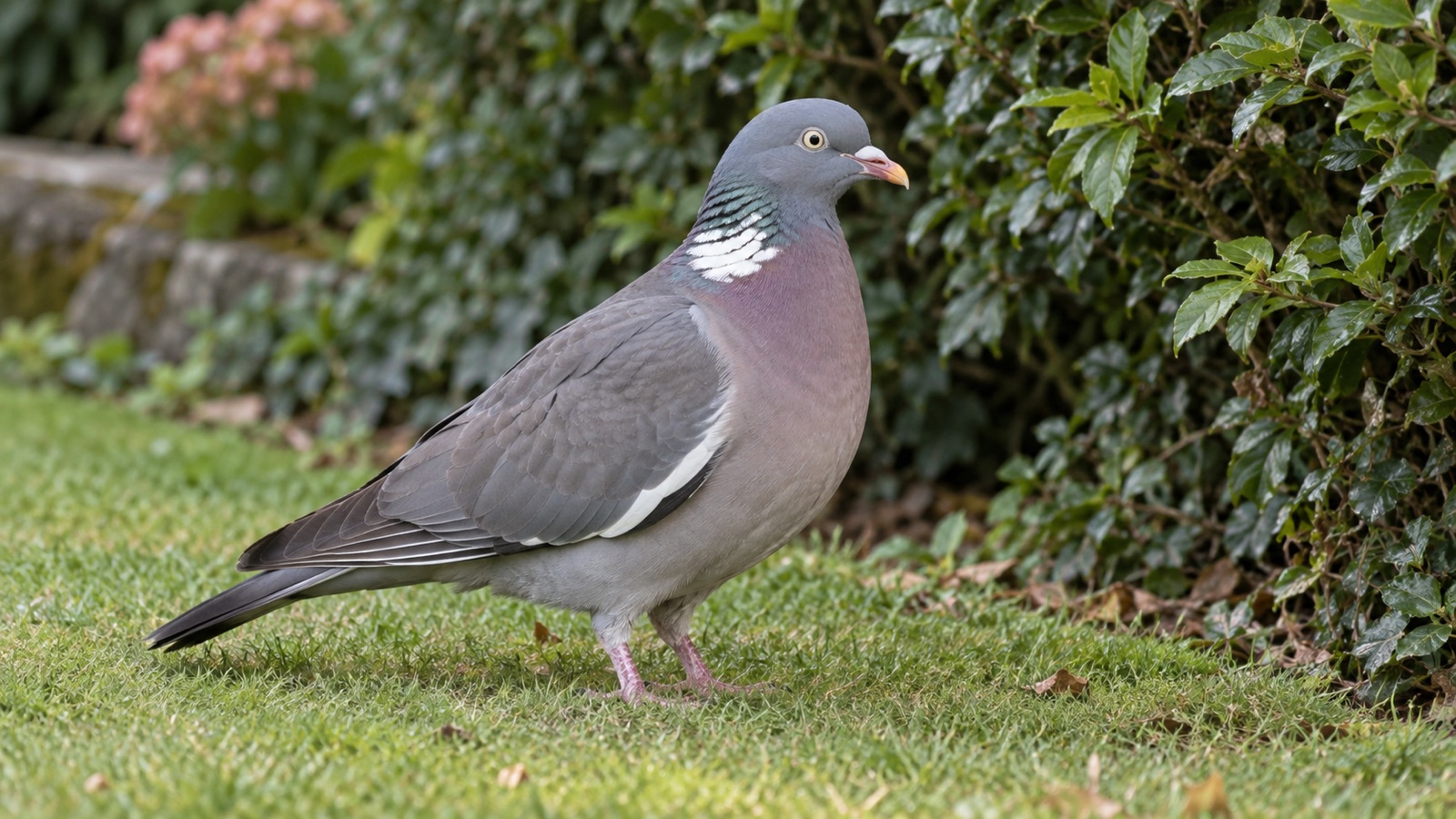
What do woodpigeons eat? They take a broad range of plant food, including seeds, grain, buds, shoots and berries. They will also collect seed that smaller birds drop from a garden feeder. The RSPB woodpigeon account describes Britain's largest common pigeon and its ability to use woodland, farmland, parks and urban gardens. If a woodpigeon regularly patrols your lawn, it may be finding natural food as well as feeder waste.
You do not have to create a separate ground-feeding station. The more useful question is whether your existing feeder is spilling more than the intended birds can eat. Our no-mess feeding guide and under-feeder cleaning guide address that directly.
How do you identify a woodpigeon?
An adult is a large grey pigeon with a pinkish chest and white patches on the sides of its neck. In flight, the white wing bars stand out; its wings can make a loud clatter when it takes off. A collared dove is smaller and paler, with a thin black collar rather than the woodpigeon's white neck patches. A juvenile woodpigeon can lack the mature neck marking, so wing pattern, size and shape matter too.
Compare a suspected bird with the RSPB woodpigeon photographs rather than using this illustrative hero as your only reference. A feral pigeon can also be grey but has more variable plumage and a different overall shape and setting.
Why are woodpigeons always under my feeder?
Hanging seed tubes shed husks and sometimes whole food. Larger birds learn that the ground below is easy pickings. A too-large fill can also sit in damp weather and be flicked out. Rather than fitting a wide catch tray, reduce the portion and sweep up promptly. Trays and broad platforms can collect droppings alongside food, which is one reason RSPB's current feeding guidance advises against flat-surfaced feeders.
If rodents are part of the concern, our mice-and-bird-food guide covers storage, clearing spill and removing food overnight. A woodpigeon is not the cause of poor feeder hygiene; it is often exposing food that is already on the ground.
Can a caged feeder keep food for small birds?
A properly sized guard can reduce larger-bird access to an enclosed seed tube during the permitted feeding season. It cannot make the entire garden pigeon-free, and some models still let a woodpigeon reach through or feed from the spill below. Check the actual guard opening and the access needs of the small species you want to support. Our caged-feeder guide covers sizes, cleaning and trade-offs; the pigeon-resistant comparison offers broader options.
Clean guarded feeders too: caging does not stop old food or droppings accumulating. RSPB recommends moving and cleaning used feeding points weekly. Its current advice also asks for a May–October pause on supplementary seed and peanuts, so the products below are winter options rather than year-round fixtures.
Should I put food out for woodpigeons?
There is generally no need to add a dedicated pile. Their natural diet is broad, and a flat seed tray creates extra disease and pest risks. If you enjoy seeing them, a garden with varied planting and a clean shallow water source is a more balanced choice than an exposed food heap. The RSPB natural-food guide includes plants that provide food to many species.
If you feed other birds, stick to small, fresh portions and follow the BTO seasonal FAQ. Do not respond to a hungry-looking woodpigeon by topping up food intended for finches, particularly outside the recommended months.
Can woodpigeons nest in a garden tree?
Yes. They may nest in a suitable tree or large shrub, sometimes where people can see them from a window. Observe from indoors or a respectful distance. Do not disturb an active nest or assume that a standard hole-front nest box is suitable for a pigeon. You can still maintain the rest of the garden without trying to move the bird.
Are woodpigeons bigger than collared doves?
Yes. Size, the white neck patch and the white wing markings are useful clues, though juveniles need more careful comparison.
Is a “pigeon-proof” feeder really pigeon-proof?
Treat that as a shorthand for access resistance, not a promise. Guard spacing, mounting position and fallen seed all affect the outcome. Watch what happens in your own garden and adjust rather than relying on a label.
Helpful products
Contained food access for smaller birds
These guarded feeders are for people trying to preserve a clean winter seed point for smaller birds. Neither is guaranteed to exclude every woodpigeon; the ground beneath still needs clearing.
Supa caged seed feeder
Best for: A contained winter seed option for smaller birds where pigeons reach open food
A powder-coated steel cage around a seed tube, with a flip-top lid and stated overall dimensions of about 26 by 17 by 17cm.
Keep in mind: Cage apertures and positioning determine access; spilled seed may still draw pigeons.
RSPB Ultimate seed feeder and guardian (small)
Best for: Reducing access at a small seed tube rather than using a broad tray
An easy-clean seed feeder enclosed by a metal guardian that limits physical access to the feeding ports.
Keep in mind: No feeder is pigeon-proof in every garden; keep the area underneath clear.