Garden bird guide
Collared doves: food, identification and garden feeding
Identify a collared dove, understand its seed-feeding habits, and keep a mixed garden tidy without resorting to unsafe flat food trays.
What do collared doves eat? Seeds and grain form a large part of their diet, with other natural plant foods also taken. They often walk beneath hanging feeders to pick up fallen seed. The RSPB collared-dove profile describes a bird commonly seen alone or in pairs, with larger groups sometimes forming where food is plentiful. If several doves arrive daily, first look for excess food under the station rather than assuming you need a dedicated dove feeder.
Collared doves are normal garden visitors, not a problem to be harmed or chased. The aim is to avoid persistent food waste and to give smaller birds access where appropriate. Our no-mess feeding guide covers portion size, seed choice and clearing debris.
How do you recognise a collared dove?
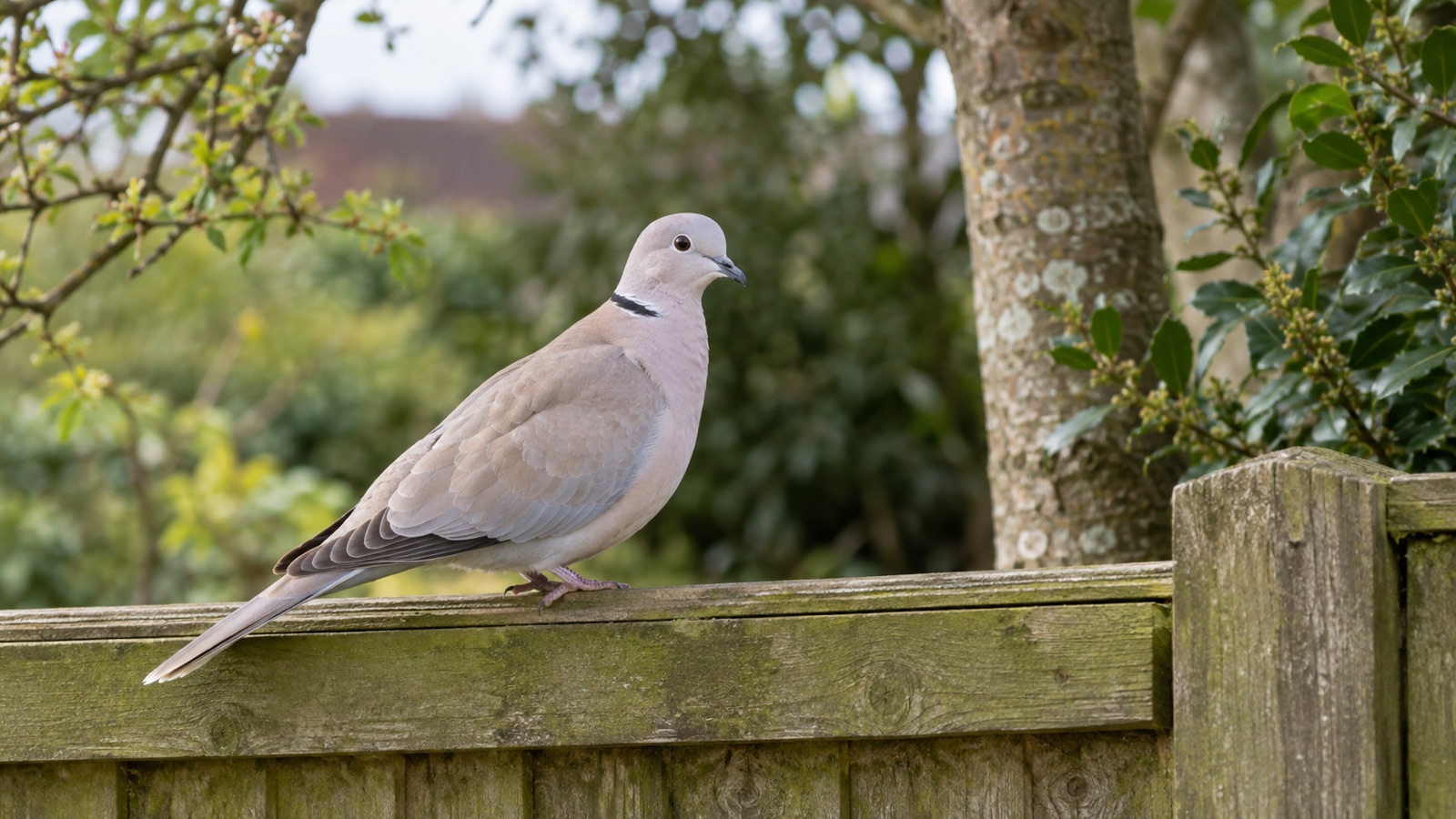
Look for a pale beige-grey body, long tail, dark eye and a narrow black crescent on the back and sides of the neck. It is noticeably slimmer and smaller than a woodpigeon, which has white patches on its neck and wings. A juvenile collared dove may not show a full collar yet, so compare shape and overall colouring too.
Its repeated cooing call is familiar around houses and gardens. Listen to the RSPB call and compare its photographs if a bird is partly hidden. Our hero is an illustrative generated scene, not an identification photograph.
Why do collared doves gather under feeders?
Seed falls from ports, is dropped by smaller birds or is shaken out when a feeder is overfilled. Doves can exploit that supply from the ground, as can rodents. Use a modest fill, sweep hard surfaces and remove old wet food. The clean-under-feeders guide explains the routine. A tray fixed beneath a feeder may look tidy but can become another contaminated flat feeding surface.
RSPB's 2026 feeding update advises against bird tables and other flat-surfaced feeders, and recommends cleaning and moving used feeders weekly. That applies even if you would like to accommodate doves. A broad tray of mixed seed is not the safer answer.
Can smaller birds still get food?
Yes, by using a contained feeder sized for the birds you are supporting. A guard around a small seed tube can make access harder for larger birds, but measure the openings and observe the result: some doves may still reach food, and spilled seed remains available below. Our caged-feeder guide discusses the limits and cleaning trade-offs. Do not assume any one model is perfectly dove-proof.
Keep the current seasonal seed window in mind: seed and peanuts November–April, then pause May–October to reduce disease risk. The seasonal pause applies even if the visiting doves look healthy. You can still help with natural cover and fresh water during the rest of the year.
Should you feed collared doves separately?
There is usually no need. They already find natural food across gardens and surrounding areas. A special ground pile would add crowding, droppings and cleanup work. If your actual concern is keeping a small-bird feeder available, manage access and spillage instead of creating another feeding area. For broader comparisons, see our pigeon-resistant feeder guide, which treats resistance as conditional rather than absolute.
A shallow bird bath can serve doves and other birds if you replace the water daily and clean it. Put it where birds can see approaching cats and reach cover. That is a better all-species addition than more seed.
Do collared doves nest in UK gardens?
They can use trees and shrubs in suitable gardens. Watch from a distance, and do not trim or disturb an active nest. A conventional small-hole nest box is designed for different birds and will not be a collared-dove home. The RSPB species account is a better starting point for their behaviour than a product label promising to attract them.
Is a collared dove a small woodpigeon?
No. It is a different species. The collared dove is slimmer and paler, with a black half-collar; the larger woodpigeon shows white on the neck and wings.
How can I stop doves eating spilled seed?
Reduce the amount offered, use a contained feeder, clear debris under it and pause seed in the May–October window. Do not rely on a tray that simply collects the seed and droppings together.
Helpful products
Share a garden without creating a seed-spill patch
A guarded tube can reserve a small portion of winter seed for smaller birds, while fresh water is useful to many species. Check actual access and clear all spilled food; neither product should be treated as a dove deterrent.
RSPB Ultimate seed feeder and guardian (small)
Best for: Giving small birds a contained seed point when doves dominate an existing station
An easy-clean seed feeder enclosed by a metal guardian that limits physical access to the feeding ports.
Keep in mind: Check the actual guard spacing and clean spilled seed; never assume it excludes every dove.
Peckish Secret Garden bird bath
Best for: A shallow drinking point for a mixed garden
A 60cm-high decorative metal bath with a 40cm-wide bowl, broad base and tool-free assembly.
Keep in mind: Replace water daily and wash the bath weekly.