Garden bird guide
Siskins: food, identification and winter feeder visits
Recognise a siskin by its narrow bill, streaked yellow-green plumage and forked tail; learn how to offer winter nyjer or sunflower hearts safely.
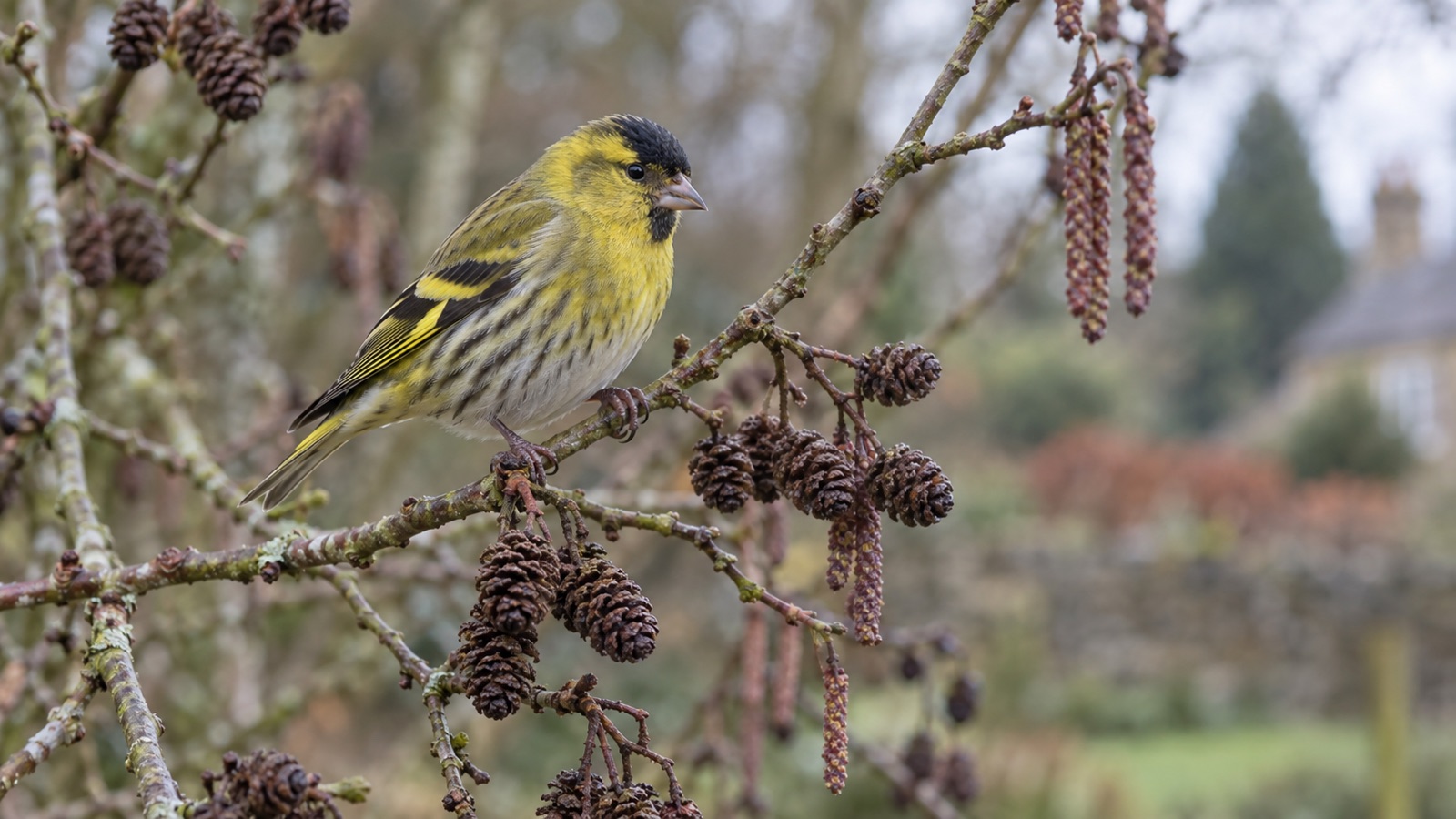
What do siskins eat? Small tree seeds are central to their diet, especially those from alder and conifers. They also take small invertebrates when available. In winter, some visit gardens for nyjer seed or sunflower hearts. The RSPB species account places them strongly in woodland habitats and notes that winter numbers are boosted by arrivals from Europe. A garden visit is therefore exciting but not something a bag of seed can guarantee.
Look at alder catkins and cones around a wooded edge before looking at the feeder. A bird extracting natural seed from a tree is getting food without the crowding and spoilage risks of a communal station. Keep nearby trees and their seed-bearing branches when it is safe to do so.
How can you recognise a siskin?
A siskin is a small, lively finch with a slim bill and a visibly forked tail. The male has a black crown and bib, streaked yellow-green body and yellow patches in the wings and tail. Females lack the strong black head markings and can look more subdued, so use bill shape, streaking and flight pattern together. A greenfinch is bulkier and heavier-billed; a goldfinch has a red adult face and a different wing pattern.
The RSPB's siskin photos are the right place to check an uncertain bird. Our generated hero is an illustration, and a distant finch can be especially hard to separate from other yellow-green visitors. Listen as well as look: siskins are often busy and vocal in a moving group.
When do siskins visit garden feeders?
Their timing varies with natural seed crops, local woodland and winter movements. They may appear in a small flock for a spell and then vanish. That does not mean your equipment has failed. Keep food quantities matched to demand and avoid buying a large nyjer sack after one memorable visit. The how-much-food guide helps keep a small feeder fresh.
If you already have a clean winter seed tube, try a little sunflower heart before buying a dedicated nyjer feeder. A siskin may use either, and so may other birds. Habitat and chance still govern who arrives.
Nyjer or sunflower hearts: which is the better start?
Nyjer is tiny and needs ports that do not let it pour out. The nyjer-feeder guide compares suitable designs and cleaning access. Sunflower hearts fit a normal clean seed tube, and our sunflower-hearts guide covers pack size and storage. Neither food is “siskin-only”. A large nyjer tube is a poor buy if visits are sporadic because the seed can sit damp and stale.
Current BTO guidance asks UK gardeners to offer supplementary seed and peanuts only November–April, pausing them May–October to reduce finch disease risk. This applies to siskin feeding as much as to greenfinch feeding. Clean a used feeder at least weekly, replace old seed rather than topping it up, and clear fallen seed below. The BTO hygiene guide explains the precautions.
What helps siskins without another feeder?
Trees that bear small natural seeds, mixed cover and fresh water are worthwhile. A single garden cannot reproduce a conifer wood, but retaining mature trees and avoiding unnecessary removal of seed-bearing growth can help. If you have no nearby tree cover, be realistic: a specialist feeder may not change the habitat enough to attract this species.
Watch for illness at any finch feeding point. A fluffed, lethargic bird or one struggling to swallow calls for stopping supplementary feeding, removing food and water, and following current BTO disease guidance. Do not move a dirty nyjer feeder elsewhere and refill it. Hygiene is a condition of feeding, not an optional extra after buying products.
Are siskins present in the UK all year?
Yes, some breed here, particularly in suitable woodland; winter visitors from Europe can increase numbers. Garden sightings are often more noticeable in colder months.
Is a siskin just a small greenfinch?
No. The siskin's narrow bill, forked tail and heavy streaking distinguish it from the stockier, broad-billed greenfinch. Check several marks rather than relying on yellow feathers alone.
Helpful products
Small winter seed options for occasional siskins
Nyjer needs dedicated fine-seed ports; sunflower hearts can go in a clean ordinary seed tube. Start small because siskins may be seasonal visitors.
RSPB Premium easy-clean nyjer feeder (9 inch)
Best for: A small winter nyjer fill for an occasional siskin visit
A two-port nyjer feeder with an aluminium top and base, a UV-stabilised polycarbonate tube and removable components for cleaning.
Keep in mind: Do not keep topping up a feeder birds ignore; nyjer can become stale or damp.
RSPB sunflower hearts (900g)
Best for: Trying fresh sunflower hearts in the permitted winter season
A small 900g bag of husk-free sunflower kernels, suited to testing demand before buying a larger pack.
Keep in mind: Siskins are finches; seasonal limits and strict hygiene matter more than attracting a flock.