Feeder buying guide
Best bird feeders for robins in UK gardens
Robins may investigate a small hanging suet holder, but natural foraging matters more than a ground tray. Compare a realistic option and its limits.
Our recommendations
One small non-flat option to try
This is a compact fat-ball holder, not a specialist mealworm feeder or a promise that robins will use it.
Jacobi Jayne Bird Lovers small fat ball feeder
A compact hanging feeder that holds up to three suet balls and has a quick-release base for easier cleaning.
Best small-capacity easy-clean option. Drawback: the plastic construction offers less chew resistance than an all-metal cage.
Robins usually search soil and leaf litter for invertebrates. That does not mean a tray on the ground is the best way to help them. Current BTO advice says flat-surface feeders, including ground stations, carry a higher apparent disease-transmission risk than hanging feeders and are best avoided. A robin may learn to use a low, stable hanging feeder when the food is accessible; it may also prefer to keep foraging naturally.
Which feeder is the best fit?
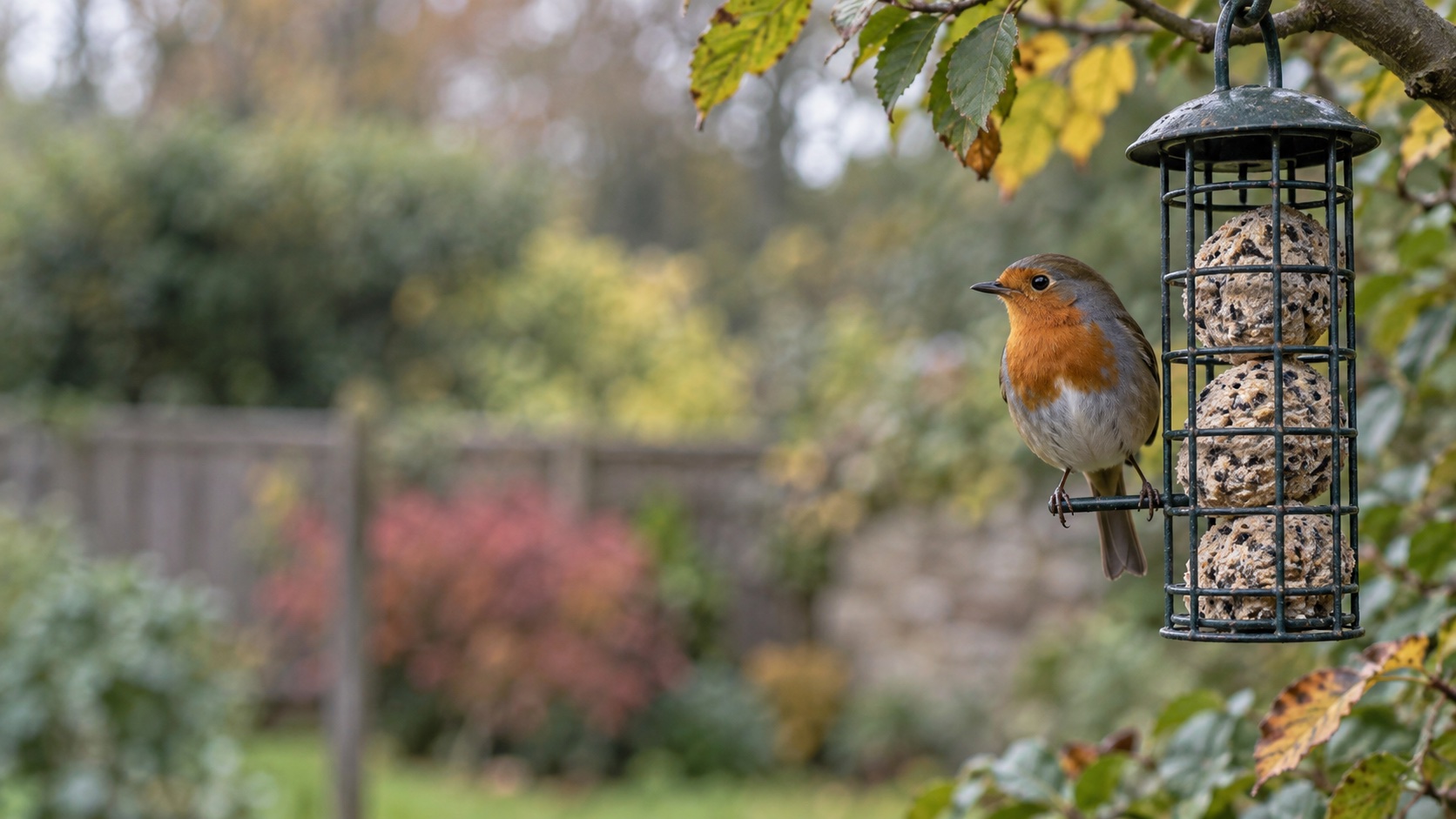
The Jacobi Jayne Bird Lovers small fat-ball feeder holds up to three unnetted fat balls in a hanging, cleanable holder. It has mesh access rather than narrow seed ports and no broad food-catching tray. Start with one ball, not the full capacity. If a robin already investigates hanging suet, this is a modest way to see whether it will take it.
It is not a robin-only feeder. Tits and starlings may arrive first, and many robins may never become comfortable clinging to mesh. Observe the bird's actual approach before buying more equipment. If a robin repeatedly comes beneath the feeder without landing, lowering the hanging point within a safe, open position may help; leaving food scattered below does not solve the hygiene problem.
The feeder must be easy to remove and brush at every mesh junction. Check for damaged plastic, a loose lid and food stuck near the base after each clean. A small capacity better matches food turnover in a quiet garden.
What should go in it?
Put unnetted fat balls in this particular holder; it is not sold as a mealworm container. RSPB's 2026 guidance allows small amounts of mealworms, fat balls and suet through May–October, while recommending that seed and peanuts pause until November. Mealworms require a genuinely suitable non-flat dispenser; many products marketed for them have a tray or trough. Read our mealworm guide for preparation and portion advice, but do not pour worms into this fat-ball holder.
Avoid trying to turn a seed tube into a mealworm feeder. Food can lodge behind ports intended for dry seed. Whole peanuts also need their own suitable rigid-mesh holder and are part of the November–April seasonal seed-and-peanut period.
Where should it hang?
Find a point where the robin can see the feeder from a shrub or low branch, but cannot be surprised by a cat emerging from dense cover. Keep the mesh clear of walls and branches that let a squirrel reach sideways. A low hanging position can be useful if it remains safely above soil and is not reachable by pets or rodents. Put it where you can take it down weekly without a ladder.
Robins are territorial; a single bird may dominate a small garden. If several birds compete, separate modest feeding points rather than concentrating food in one crowded place. Move the feeder's position regularly and clear debris beneath it. Our robin species guide explains what these birds find naturally across the seasons.
When would we skip buying a feeder?
If your robin already hunts successfully in leaf litter, hedges and undisturbed borders, better habitat may be the more valuable investment. Let some fallen leaves remain under shrubs, avoid pesticides and provide safe water if you can change it daily. No purchased feeder guarantees visits.
If you notice lethargic, fluffed-up or otherwise unwell birds, stop supplementary feeding and follow BTO hygiene advice. Wash and disinfect the feeder, remove fallen food and do not restart until the recommended pause has passed. For routine cleaning, see how to clean bird feeders.
Common questions
Will a robin use a hanging feeder?
Some do, particularly when accessible suet is offered, but individual birds differ. Start with a small amount and watch before changing the setup.
Are robin feeding trays a good idea?
We would not choose one under current BTO/RSPB guidance. An easily cleaned tray is still a shared flat feeding surface. Natural foraging habitat is the first priority; a small hanging suet holder is an optional experiment.
Can I feed a robin year-round?
Small amounts of mealworms or appropriate suet can be offered outside the seed season, provided hygiene and spoilage are controlled. That is an option, not a requirement; natural food and clean water remain important.