Garden bird guide
Magpies in gardens: food, behaviour and smaller-bird access
Understand what magpies eat, identify their behaviour around feeders and nests, and help smaller birds with clean contained feeding rather than unsafe food piles.
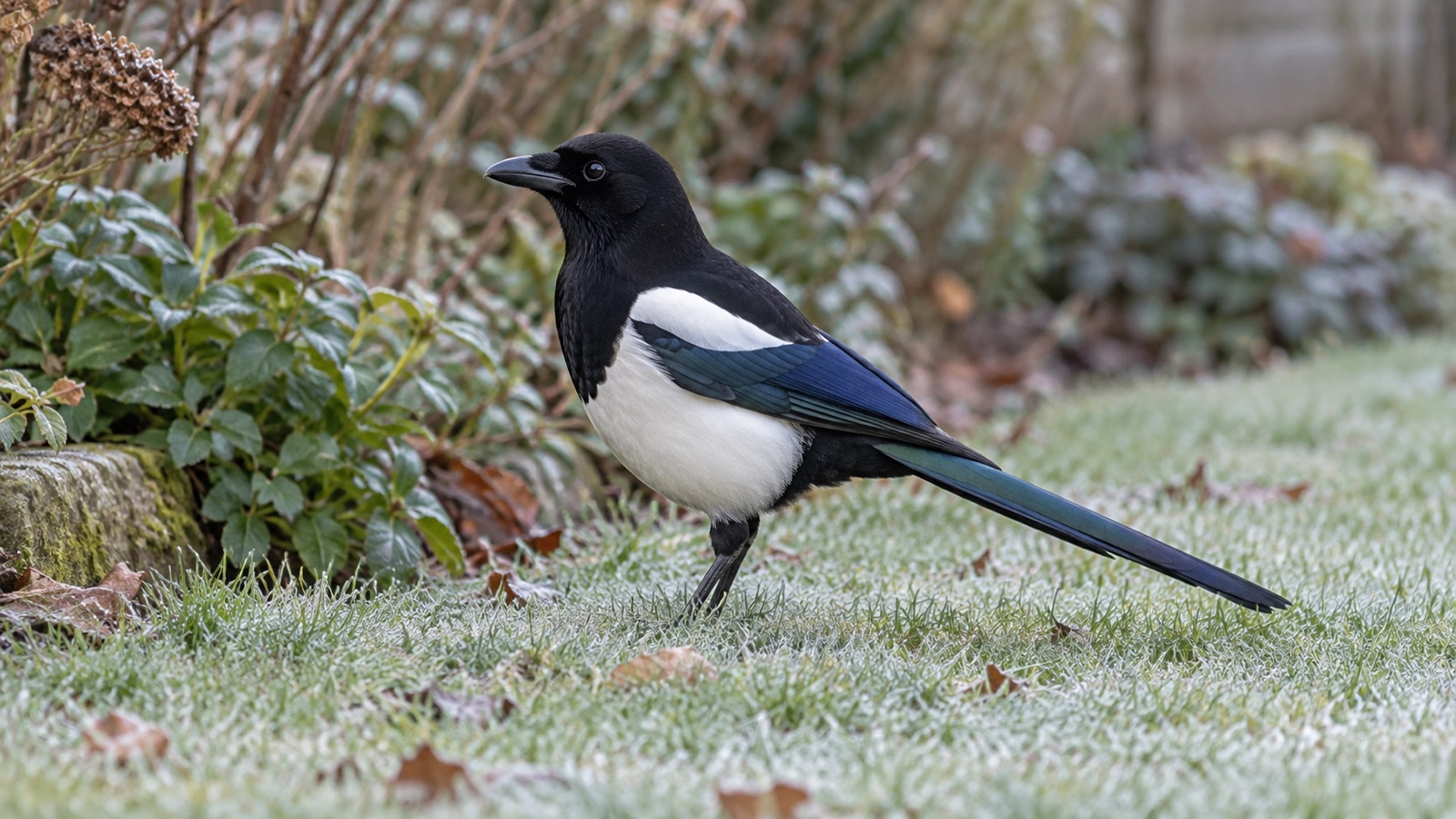
What do magpies eat? Magpies are adaptable omnivores: they take insects and other small animals, plant foods, carrion and some human-derived scraps. They can also investigate bird feeders and occasionally take eggs or nestlings. The RSPB magpie profile describes their varied role as scavengers, predators and consumers of invertebrates. A magpie on your lawn is not necessarily there for a nest; it may be searching for insects or food dropped beneath a feeder.
The most useful garden response is to watch what is happening before changing anything. If seed is falling onto paving, clear it. If smaller birds cannot reach a winter feeder, manage their access. Do not leave scraps or an open food pile to distract a magpie—those can attract more visitors and create hygiene problems.
How can you identify a magpie?
The combination of black-and-white plumage, a very long tail and loud chattering call is distinctive in a UK garden. In bright light, the dark wings and tail show blue, purple or green sheen. A jay is another crow relative but has a warm brown body, blue barred wing patch and shorter tail. Use the RSPB photographs and call if you are comparing a fleeting bird against this illustrative hero.
Pairs can be conspicuous in a garden; non-breeding birds may also gather. Seeing several birds together does not prove they are attacking nests or causing a local decline. Keep observation separate from interpretation.
Why does a magpie visit my bird feeder?
It may be reaching food directly, taking dropped seed underneath or examining a source that other birds use. Check your feeder's port size, how much you fill it and whether wet food is building up below. The clean-under-feeders guide covers removing fallen seed and droppings. Overfilling a station can create more food on the ground than at the intended feeding ports.
Current RSPB garden-feeding advice recommends contained feeders rather than broad flat tables, weekly cleaning and moving of used equipment, and a pause on supplementary seed and peanuts from 1 May to 31 October. It is not a rule aimed at magpies; it protects the mixed community using the garden.
Can a caged feeder help small birds?
A guard can reduce access for a larger bird if the openings and mounting position suit the smaller species. It is not a guarantee against every magpie, and loose seed under the cage can still be taken. The caged-feeder guide explains how to check clearance and cleanability; the small-bird feeder comparison helps if tits and finches are the birds you want to support.
Only use seed within the BTO's current November–April window. If a guarded tube adds cleaning work that you cannot keep up with, a simpler small tube with careful portions and regular cleanup may be preferable. No feeder should be placed close to an active nest as a deliberate distraction.
Do magpies take other birds' eggs?
They can, but an individual magpie's visit does not explain the fate of every nearby nest. Nest outcomes involve many predators and habitat conditions. BTO's nest-camera evidence found different predators across the habitats it studied and cautioned against overgeneralising those results to every garden. Avoid claims that magpies alone cause wider songbird declines, and do not disturb a nest to check whether an egg is missing.
If you have a nest box, give it an appropriate location and use species-fit protection if needed; the predator-protection guide addresses access routes without promising zero risk. Do not add a device to an occupied box or block its entrance while birds are using it.
What else helps a mixed garden?
Natural cover, insect-rich planting and fresh water support many species without concentrating them at one food pile. The RSPB natural-food guide suggests habitat options, and a well-placed bird bath can serve residents if you change the water daily. A magpie may use it too; that is not a reason to remove water from other birds.
Keep observation calm. Magpies are intelligent, visible garden visitors, but the aim here is practical coexistence and clean access for smaller birds—not an attempt to make a garden free of a native species.
Will removing a magpie bring more songbirds?
That is not something an individual garden sighting can establish. Address feeder hygiene, habitat and appropriate nesting provision; do not infer a wider population effect from one bird's behaviour.
Are magpies only seen in winter?
No. They are resident UK birds. Winter is simply when a garden feeding station may make their visits more noticeable.
Helpful products
Clean, contained options in a mixed-bird garden
A guarded winter seed feeder can limit larger-bird access to food intended for smaller birds; a clean bath offers water without an exposed food pile. Neither product is a magpie deterrent.
Supa caged seed feeder
Best for: Reducing access to a winter seed tube when larger birds dominate
A powder-coated steel cage around a seed tube, with a flip-top lid and stated overall dimensions of about 26 by 17 by 17cm.
Keep in mind: Check openings and clear spill; this is management of food access, not a way to exclude magpies from the garden.
Peckish Secret Garden bird bath
Best for: A clean water point that does not require an open feeding surface
A 60cm-high decorative metal bath with a 40cm-wide bowl, broad base and tool-free assembly.
Keep in mind: Change water daily; a bath is not a deterrent or a guarantee of a visit.