Garden bird guide
Jays in UK gardens: food, identification and acorn caching
Recognise the colourful woodland jay, understand why it hides acorns, and manage a mixed garden without relying on an open food tray.
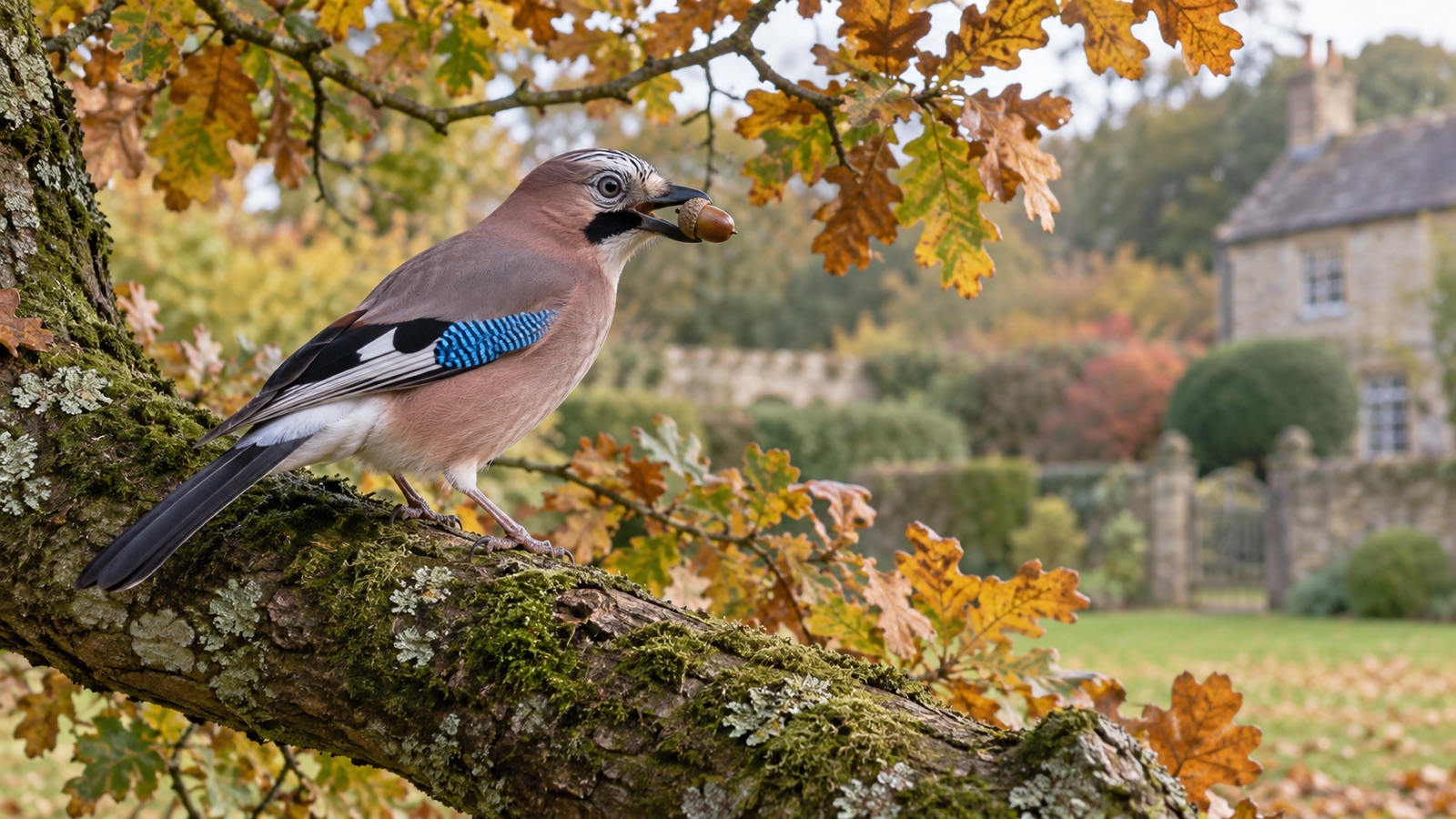
What do jays eat? Their diet is varied, but acorns are the food most people associate with a jay in autumn. A bird may carry an acorn from an oak, bury it and return later. Jays also take other seeds, insects and animal food. The RSPB jay account describes shy woodland birds that often reveal themselves first with a harsh call or a flash of white rump as they fly. A mature oak and nearby cover are a much stronger reason for a garden visit than an open tray of bird food.
If you see one repeatedly, watch where it is going. A jay may be using a tree just beyond your fence rather than your feeder. That matters when deciding whether any product would actually help you or the other birds in the garden.
How do you recognise a jay?
The body is warm pinkish-brown with a black moustache line, pale face and a striking blue-and-black barred wing panel. In flight, the white rump is obvious. Its shape is that of a medium-sized crow relative, not a small finch. A magpie is larger, longer-tailed and stark black-and-white, with a different call and feeding behaviour.
Look at the wing panel in good light, but do not chase a bird out of cover to get a closer view. RSPB provides jay photographs and a call recording for comparison. The generated hero here is an illustration, not a record of a particular local bird.
Why do jays bury acorns?
Food stored in autumn can be recovered when conditions change. The RSPB describes jays carrying acorns and burying them for later in winter. Some caches will be forgotten or never recovered, so this behaviour can also move oak seeds away from the parent tree. You might see a bird land on a lawn for only a few seconds, push an acorn into soil and leave. That is ordinary foraging, not a sign it is digging up your planting.
Keeping mature trees where safe, and allowing a little leaf-litter habitat, supports a wider food web. The RSPB natural-food guide is more useful here than a promise that one bag of peanuts will bring a jay to a small urban yard.
Do jays use garden feeders?
Some do, but many are wary and remain near trees. Do not build a permanent flat feeding area solely because you saw a jay. If you already feed other birds with seed, use a contained, cleanable design, offer a small portion and check for spill. The RSPB's current guidance asks for seed and peanuts to be paused May–October, feeders cleaned and moved weekly, and flat surfaces retired. It applies to the whole garden, regardless of which bird is visiting.
If a jay monopolises a small-bird tube in the winter feeding window, a guard may reduce its access. Our caged-feeder guide explains the openings and cleaning trade-offs; the product below is one contained option, not an absolute jay barrier. Clear dropped seed underneath or the guard merely shifts the food to the ground.
What about water and shelter?
A shallow clean bath is useful to many birds and does not crowd them around a food pile. Replace water daily and keep the bath where birds can see approaching cats. The bird-bath placement guide helps with height, cover and cleaning access. A jay might drink there or might never use it; either outcome is normal.
For cover, trees and connected shrubs are more important than a tiny decorative nest box. Jays nest in trees; never inspect or disturb an active nest. If your goal is to support small cavity-nesters at the same time, choose species-appropriate nest boxes and position them safely rather than expecting a jay deterrent to solve nesting decisions.
Is a jay harmful to smaller birds?
Jays are part of a natural food web and can take eggs or young birds, as well as insects and plant food. Seeing one near a nest is understandably worrying, but it does not tell you what happened at that nest or justify disturbing it. Keep habitat varied and suitable cover available. BTO research on nest predators shows why simple claims about one predator and all garden nesting outcomes are unreliable across habitats.
If you want to watch nesting birds, observe from a distance. Do not turn a feeder into bait beside an active nest or move a box during use.
Are jays common in towns?
They can use parks and mature gardens, especially near woodland, but remain easy to miss because they keep close to cover. Their call may be your first clue.
Should I put whole peanuts out for a jay?
Do not scatter nuts on the ground. If you feed other birds peanuts at all, follow current BTO seasonal and hygiene advice and use a suitable rigid mesh feeder in November–April. A jay does not need a dedicated peanut pile.
Helpful products
Share space with a jay and protect smaller-bird access
A guarded winter seed tube can help smaller birds keep a feeding point if a jay takes over. Fresh water benefits the wider garden. Neither product is intended to attract or exclude jays.
RSPB Ultimate seed feeder and guardian (small)
Best for: A guarded winter seed point if a jay displaces smaller feeder users
An easy-clean seed feeder enclosed by a metal guardian that limits physical access to the feeding ports.
Keep in mind: It will not affect acorns or natural jay visits and may not exclude every individual.
Peckish Secret Garden bird bath
Best for: A clean, shallow water source for all visiting birds
A 60cm-high decorative metal bath with a 40cm-wide bowl, broad base and tool-free assembly.
Keep in mind: Water helps broadly, but will not reliably bring a jay into a garden without mature trees.