Garden bird guide
Coal tits: identification, food and winter feeders
Recognise a coal tit by its white nape and learn what it eats, why it carries food away and which small, clean feeder formats suit a UK garden.
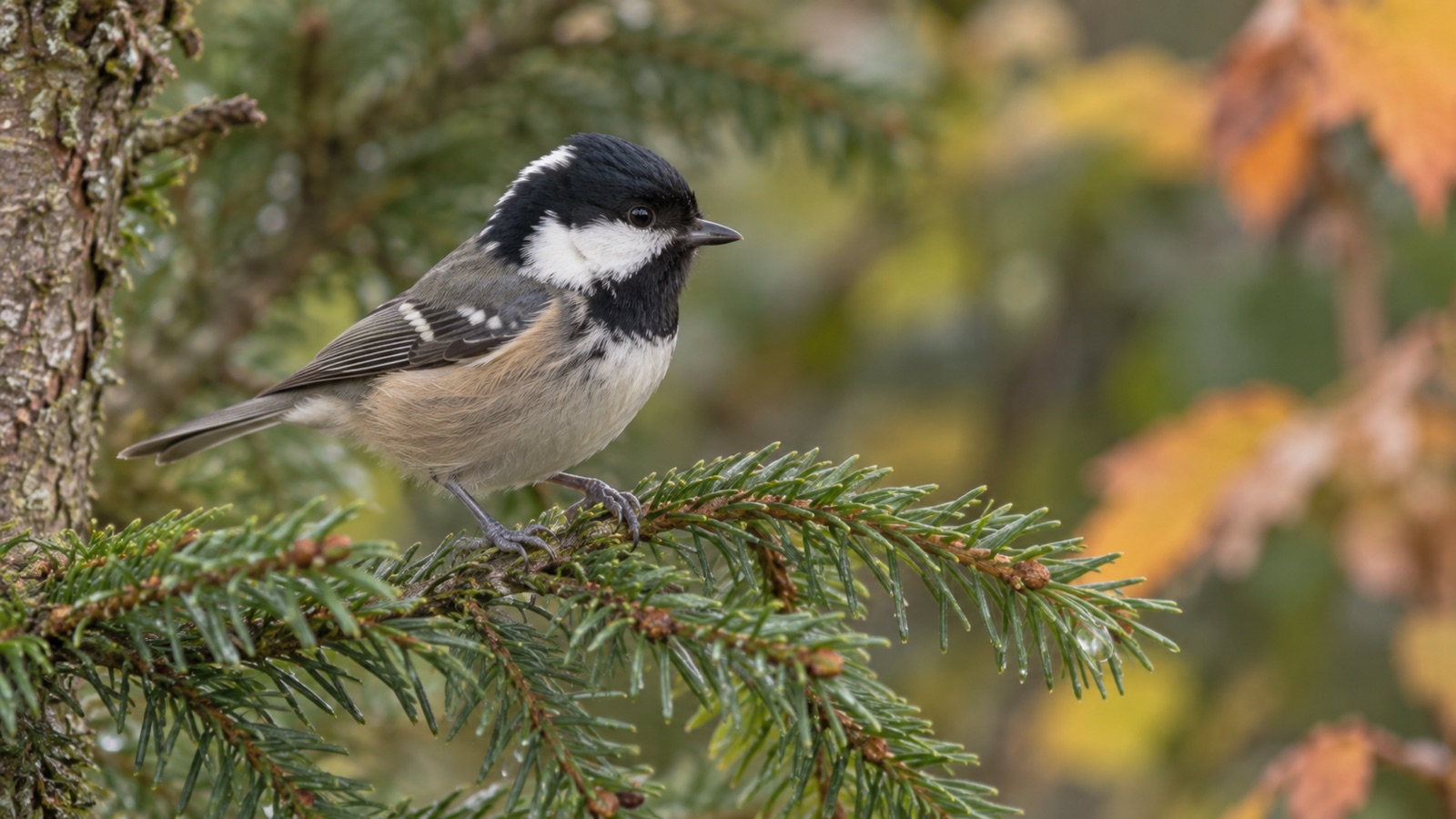
What do coal tits eat? They search trees, particularly conifers, for insects, spiders and seeds. In a garden they may take sunflower hearts or peanuts from a feeder, often departing almost immediately with the food. The RSPB's coal-tit profile notes that they store food for later. A bird that makes several quick visits is therefore not necessarily eating everything on the spot.
If your garden has mature trees or connects to woodland, look there first. A coal tit is a woodland bird that happens to visit feeders, not a species you can reliably summon with one special product. Leaving natural cover and keeping existing trees healthy can be more valuable than adding another large reservoir of seed.
How do you recognise a coal tit?
The key mark is a white patch on the back of the black head. From the front you may see white cheeks and a black throat, which can initially resemble a great tit. Turn your attention to the grey back, buff-grey underside, fine bill and small size. A great tit has a bold black stripe down a yellow front; a blue tit has a blue cap. Neither has the coal tit's conspicuous white nape.
In poor light, do not make the identification from one feature alone. Watch the bird turn, note its size against the feeder and compare the RSPB's photographs and calls. The generated image above is atmospheric rather than a diagnostic reference. A glimpse of a black-and-white head on a fast-moving bird is especially easy to misread.
Why does a coal tit take food away?
Coal tits cache food. One may pick up a seed, fly into cover and return a moment later. This can make a small feeder look extraordinarily busy. It does not mean you should fill it to the top: unused food at the bottom can still turn damp or stale. Start with a modest amount that other birds will also clear promptly, then adjust the portion to actual demand.
Winter flocks can include coal, blue and great tits moving through gardens together. A brief wave of activity followed by a quiet afternoon is normal. The bird's own habitat, not the number of feeder ports, decides whether it is likely to return.
Which feeder and food make sense?
For sunflower hearts, a small tube that comes apart for cleaning is more useful than a huge tube marketed for particular species. See the sunflower-hearts food guide for pack size and spoilage, then the tube-feeder guide for port and cleaning differences. Whole peanuts belong in a rigid mesh feeder, never loose; our peanut-feeder comparison explains the mesh and size trade-offs.
Under current BTO seasonal guidance, offer supplementary seed and peanuts November through April and pause them May through October. Suitable suet or mealworms can continue in small fresh portions if you can maintain hygiene, but neither is required to support every passing coal tit. Empty old food before refilling and clean the feeder at least weekly; the BTO hygiene advice covers the full routine.
Do coal tits use nest boxes?
Coal tits nest in cavities, but do not assume that the next small round-hole box you buy will be occupied. Position and local habitat matter, and a box already used by another species should be left alone. Our nest-box entrance guide explains why hole size alone is not a complete species match. If you add any box, place it well away from busy feeding activity and choose a sheltered position before the breeding season.
What if they stop visiting?
Coal tits can move between gardens with winter flocks. A short absence is not evidence of a problem. Check that food is fresh, the feeder is clean and surrounding cover remains safe; then let the birds decide. If you see a sick or unusually lethargic bird, stop supplementary feeding, remove food and water, and follow current BTO disease and hygiene advice rather than trying to keep the feeder attractive.
Are coal tits smaller than blue tits?
Usually yes, but size is difficult to judge from a lone bird. The white nape and grey back are more dependable together than a guessed centimetre difference.
Can coal tits eat peanuts all year?
No. The present garden-feeding advice pauses peanuts from May to October. In the permitted winter window, use good-quality whole nuts in a secure rigid-mesh feeder and keep it clean.
Helpful products
Two compact winter-feeding options
Both work only as small, well-maintained seasonal additions. There is no need to buy either simply because you have seen one coal tit.
RSPB Classic easy-clean seed feeder (small)
Best for: A modest November–April seed fill that a quick coal tit can take from
A simple 500ml, two-port feeder with a polycarbonate tube and plastic fittings that come apart without tools.
Keep in mind: A feeder cannot substitute for nearby trees and cover; pause seed May–October.
Jacobi Jayne Bird Lovers small peanut feeder
Best for: Contained whole peanuts in the permitted winter window
A compact 0.5L hanging mesh feeder for whole peanuts or suet pellets, with a twist-off quick-release base.
Keep in mind: Use only good-quality whole nuts and clean the feeder; never offer loose peanuts.