Garden bird guide
Great tits: food, feeders, nest-box size and identification
Tell a great tit from a blue tit, choose suitable seasonal food and understand the 32mm entrance used for great-tit nest boxes.
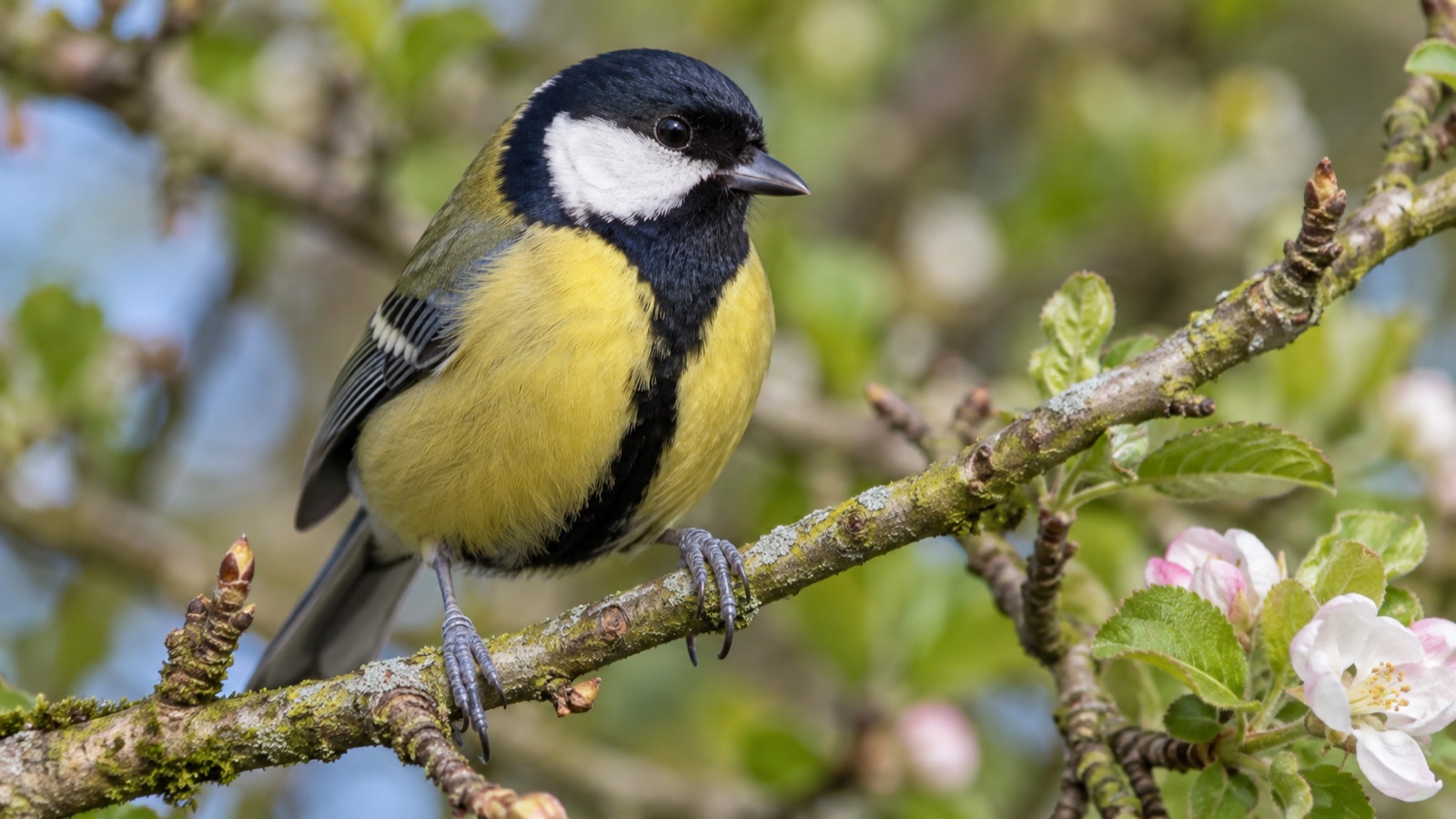
What do great tits eat? They forage for insects, spiders and caterpillars in trees and shrubs. In gardens they may also take suitable suet, mealworms and, in the permitted season, seed or peanuts. The RSPB's garden-feeding advice says both great and blue tits use hanging feeders. That is a useful observation, not a reason to fill every feeder all year.
A winter visitor may carry a seed away to eat under cover. In spring, natural insect food becomes especially important for young birds. Preserve foraging habitat first; treat supplementary feeding as a small, clean addition.
Great tit or blue tit: what should you look for?
A great tit has a glossy black head, large white cheek patches and a bold black stripe along the yellow underside. Its back is olive-green, and it looks bigger and more robust than a blue tit. A blue tit shows a blue cap rather than an all-black head, and its yellow front lacks the great tit's strong central black stripe. In poor light, use the head pattern and size together rather than trusting one glimpse of yellow.
The RSPB great-tit profile includes photographs and its familiar two-part call. Great tits can be assertive around other small birds at a feeding point. In winter they may join roaming mixed flocks, so a busy five-minute spell can be followed by a long quiet interval.
What should you put in a feeder?
From November to April, a compact seed tube with a small quantity of sunflower hearts is an uncomplicated choice. Peanuts need a suitable rigid-mesh feeder that prevents birds taking whole nuts loosely. A net-free suet holder is another option if you can keep it clean and remove old food. The BTO's current seasonal feeding FAQ advises pausing seed and peanuts from May through October, while mealworms and suitable suet can continue with good hygiene.
You do not need a product labelled for great tits. Choose equipment by how the bird accesses it and how well you can clean it. A large reservoir is often a drawback in a quiet garden because seed remains for too long. The general feeder-choice guide helps match the capacity to the birds actually visiting; the sunflower-hearts guide covers storage and waste.
Keep the feeder away from easy cat ambush points but close enough to useful escape cover. Clear dropped food rather than letting it build up under the pole. If you see wet or clumped seed, empty and clean the feeder before adding more. BTO hygiene guidance recommends frequent checks and regular cleaning across the whole feeding area.
Which nest box is suitable for a great tit?
The usual enclosed box often has a 32mm round entrance, while BTO construction advice also lists 28mm as a more focused great-tit opening. A 25mm blue-tit entrance is too restrictive. The RSPB tit-box guide and our hole-size chart explain the alternatives; our great-tit box comparison covers exact products.
A box should be sturdy, rain-resistant and without an unnecessary external perch. Mount it securely in a sheltered place with a clear flight path, away from feeding traffic. Read where to put a nest box before drilling a wall or fastening it to a tree. A suitable entrance improves fit but cannot promise occupation or exclude every competitor.
What if great tits stop visiting?
Their use of a garden changes with season, food availability and the movements of a wider flock. A brief absence is not evidence that you need to buy a new feeder. Check food condition, cleanliness, safe positioning and natural habitat first. Our quiet-feeder troubleshooting guide works through those causes. If birds seem unwell, stop supplementary feeding and consult current disease advice rather than experimenting with another food.
Can great tits use a blue-tit box?
Not a specialist 25mm blue-tit entrance. A properly made 32mm enclosed box is the usual choice for great tits, though several other species may also use it.
Do great tits stay in the UK in winter?
Yes, great tits are familiar year-round UK birds. In winter, they often join blue tits and other small birds in mixed flocks searching through gardens and woodland.
Helpful products
A correctly sized box and a simple feeder
These serve different needs: a quiet nest site and small, manageable winter seed portions. Neither should be placed beside the other.
CJ Wildlife birch-log 32mm nest box
Best for: A box with an entrance sized for a great tit
A rustic FSC birch-log box with a 32mm entrance, rain-shedding roof and solid insulating walls.
Keep in mind: Check the exact mounting position and keep it undisturbed during nesting.
RSPB Classic easy-clean seed feeder (small)
Best for: Modest November-to-April seed fills
A simple 500ml, two-port feeder with a polycarbonate tube and plastic fittings that come apart without tools.
Keep in mind: Seed and peanuts should be paused from May through October under current guidance.