Garden bird guide
Bullfinches: food, identification and a safer garden
Learn what bullfinches eat, how to spot the male and female, why hedges and buds matter and when a small winter seed feeder is only an optional extra.
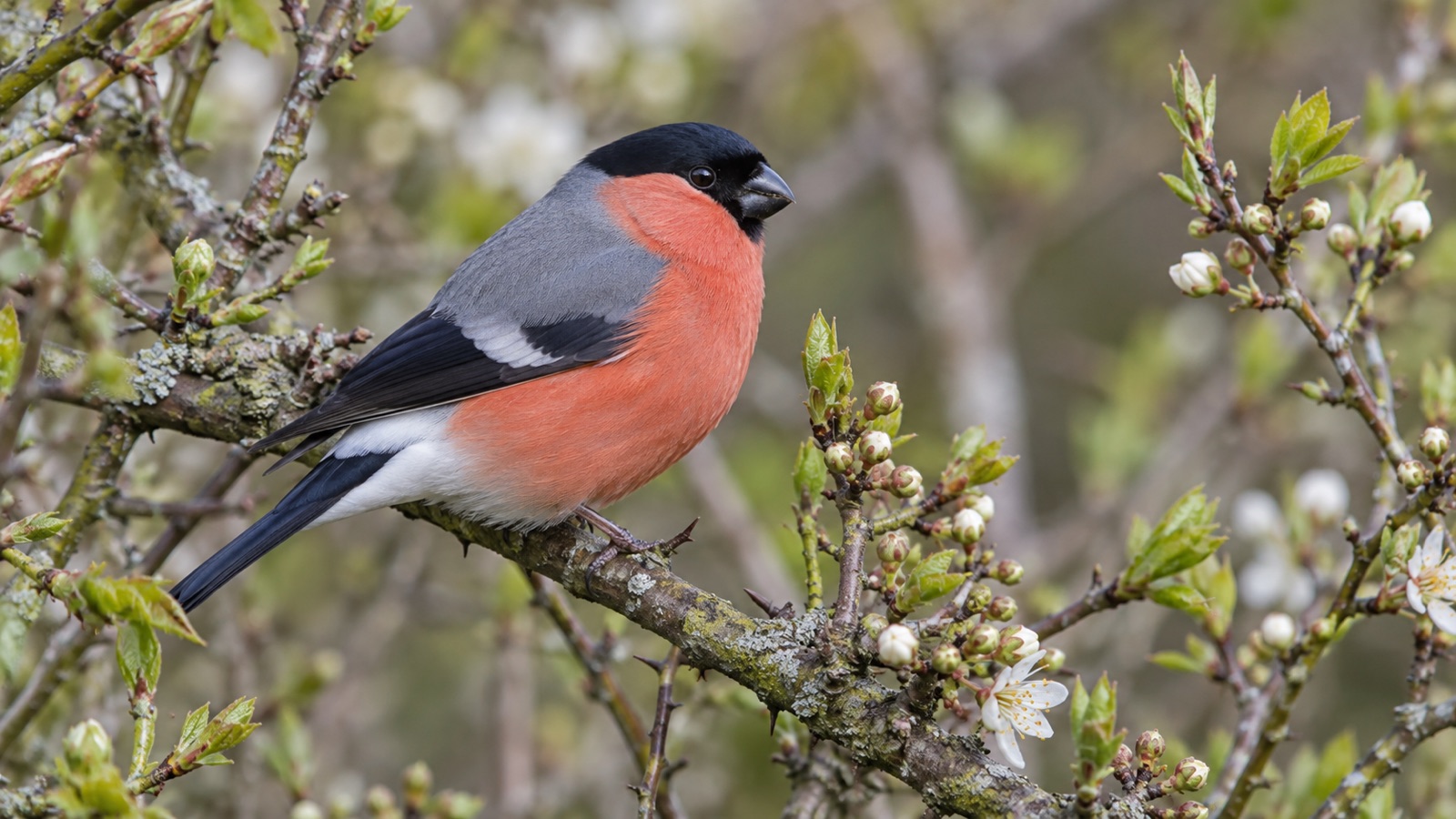
What do bullfinches eat? Seeds and tree buds are important foods, with invertebrates also taken during the year. The RSPB bullfinch profile notes their spring use of buds and their association with woodland, hedgerows and orchards. If a pair is already using your garden, watch which shrubs they choose before assuming a commercial feed mix would improve things.
This is a shy bird. It may stay inside a hedge and reveal itself only by a soft whistled call or a flash of white rump as it leaves. Keeping a connected, food-rich boundary is a better long-term choice than installing a conspicuous station in an exposed lawn.
How do you identify a bullfinch?
The male has a pink-red breast and cheeks, grey back, black cap and tail, and bright white rump. A female wears the same general pattern but with a quieter pink-brown underside. The stout dark bill is built for seeds and buds. Both sexes can show the white rump in flight. Compare the RSPB's photographs and call, especially if your view is brief.
A chaffinch is patterned differently, with obvious wing bars and no bullfinch-style white rump. A greenfinch has green-yellow tones and a different silhouette. The illustrative hero above shows a male, not the full range of appearances you may encounter.
Can a feeder attract bullfinches?
Some bullfinches may take winter seed, but there is no reliable “bullfinch feeder” that makes them visit a garden without suitable habitat. If a bird already uses the area, a small, dismantlable seed tube with a modest fresh fill is a reasonable experiment in the permitted season. Our tube-feeder guide helps choose manageable capacity, while the sunflower-hearts guide explains why a small pack is safer than buying bulk food for a rare visit.
Treat any appearance at a feeder as a bonus. The RSPB's current feeding Q&A raises concern that finch trichomonosis may also be affecting bullfinches. Cleaning alone cannot remove every transmission risk when birds gather. Do not put out more food to try to hold a pair in place.
What does the 2026 feeding advice mean here?
The BTO's seasonal FAQ advises UK gardens to offer supplementary seed and peanuts November–April and pause them May–October. The rule is for the whole garden, not just for greenfinch-heavy feeders. Empty old seed before refilling, keep quantities small, clean equipment at least weekly and clear food beneath it. The BTO hygiene instructions also cover water and the surrounding surface.
If any bird appears lethargic, fluffed up or unable to swallow, stop supplementary feeding immediately and follow current disease advice. Do not keep refilling while you wait to see whether the bird recovers. Our when-to-stop-feeding guide brings the practical steps together.
Which garden changes matter more than food products?
Retain native or otherwise wildlife-rich hedging, allow shrubs to flower and set seed, and keep layered cover between the garden and neighbouring green space. The RSPB natural-food guide explains why a varied planting structure offers more than a single feed source. Avoid heavy pruning while birds are nesting and do not assume one tidy ornamental tree replaces a dense hedge.
Fresh, shallow water can help many species if changed daily and kept clean. A well-placed bird bath is a shared garden provision, not a bullfinch lure. A quiet space from which to observe can be just as useful to you as another product is to the bird.
Do bullfinches eat fruit-tree buds?
Yes. The RSPB notes bud feeding, including in orchard habitats. The answer is to think about garden planting and coexistence, not to offer an unsafe alternative food throughout the year.
Why have the bullfinches disappeared?
They may simply be feeding unseen elsewhere in their territory. Look and listen near hedges at a quiet time. Check for habitat changes, but do not infer a problem from a few days without a feeder visit.
Helpful products
One optional winter seed setup
A small feeder is only worth trying if you can keep it clean and fresh. It is not a substitute for a mature hedge or a guaranteed way to attract a shy bullfinch.
RSPB Classic easy-clean seed feeder (small)
Best for: A small, observable seed portion only if bullfinches already visit
A simple 500ml, two-port feeder with a polycarbonate tube and plastic fittings that come apart without tools.
Keep in mind: No feeder reliably attracts a shy bullfinch; natural buds and disease-aware hygiene come first.