Garden bird guide
Bramblings in winter: food, identification and garden visits
Tell a brambling from a chaffinch, understand its changing winter numbers, and choose modest, hygienic seed feeding only when it fits.
What do bramblings eat? Tree seeds are important in winter, especially where beech mast and other natural seed crops are available. They may join chaffinches and other finches, and some will use garden food, but the size of a local flock can change greatly from one winter to the next. The RSPB brambling profile describes their winter flocking and variable numbers. A single sighting does not call for a large new feeding station.
If birds already visit your garden, a small amount of fresh seed in a contained, cleanable feeder is more measured than scattering seed across a lawn. Check underneath for dropped food and clean the area; see our guide to cleaning beneath feeders. A brambling foraging under beech trees may ignore a hanging tube altogether.
How can you tell a brambling from a chaffinch?
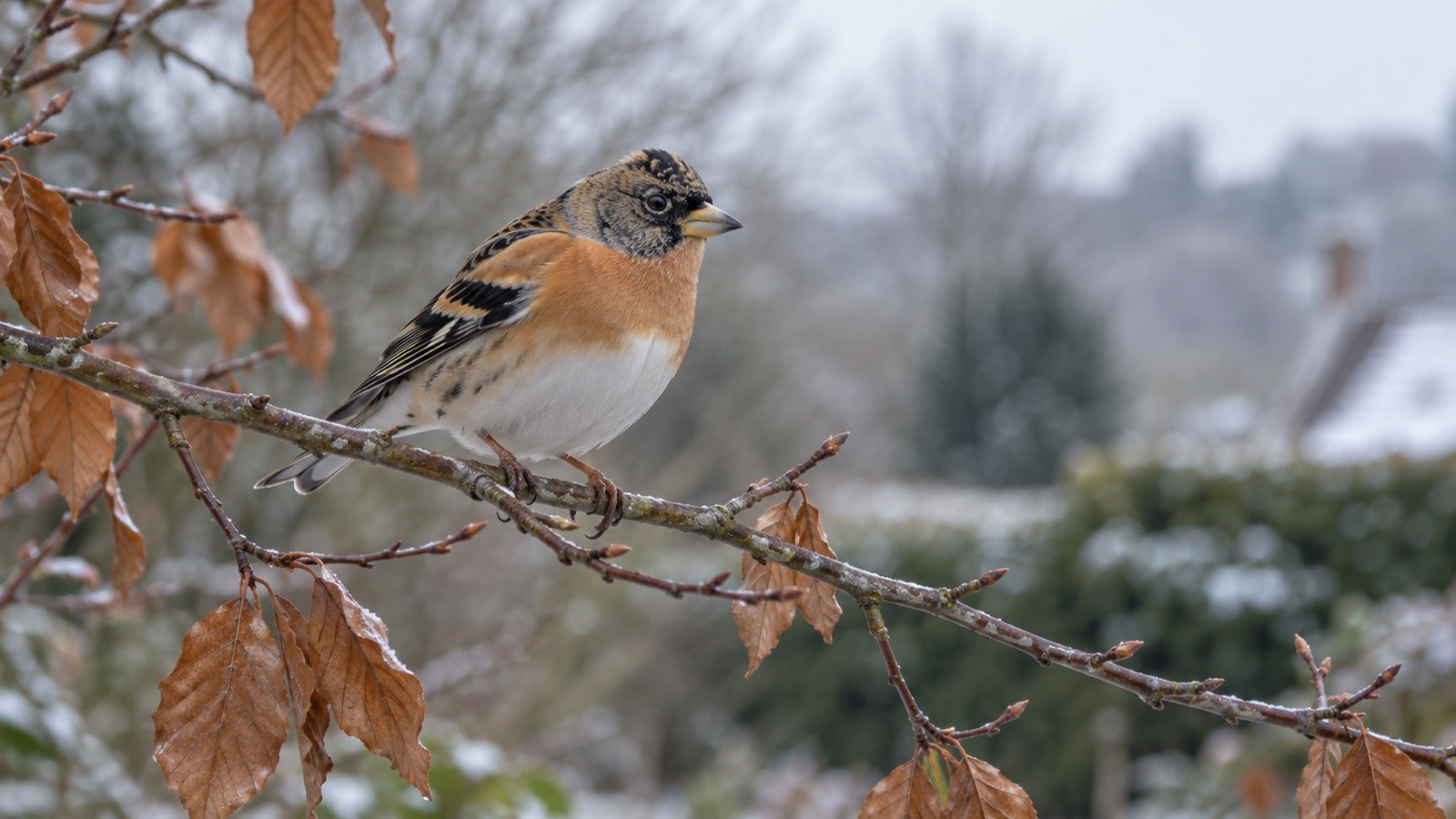
The brambling has a warm orange breast and shoulders, a pale or white belly and a white rump that can flash as it flies away. A winter male's head is usually mottled rather than the solid black of breeding plumage. Females and young birds can be subtler, so use the orange shoulder, white rump, overall pattern and call together. A chaffinch has its own bold white wing bars but lacks the same combination of orange and white.
Take a photograph if you can do so without approaching the flock, then compare it with the RSPB brambling images. Our hero is an illustrative generated image, not a photograph for settling a difficult identification. Birds feeding partly hidden among fallen leaves are especially easy to misread.
When do bramblings come to the UK?
They are winter visitors, with arrival and local abundance influenced by food supplies and weather beyond your garden. One year a woodland edge may have an obvious flock; another year you may see none. The RSPB notes that bramblings can gather socially with chaffinches. Look under beech trees and at the edge of fields before assuming a garden feeder is the best place to find them.
If snow blocks their usual foraging ground, keep any supplementary food small and fresh. Our winter-feeding routine explains how to size portions to actual use. It is better to serve the birds that are present than to stock a tube in hope of a passing flock.
Will bramblings use a seed feeder?
Some do; many are more often seen feeding below trees or shrubs. A small contained tube can offer sunflower hearts to the mixed finches already visiting. Our sunflower-hearts guide covers pack size, storage and freshness, while the tube-feeder guide helps you choose one that comes apart for cleaning. Neither is brambling-specific. Avoid a big flat tray that accumulates waste and droppings.
The current RSPB feeding guidance asks UK gardeners to pause supplementary seed and peanuts from 1 May to 31 October, clean and move used feeders weekly, and change water daily. That seasonal rule still matters if you were excited to see a winter finch. Feed only from November to April and remove old seed instead of topping it up indefinitely.
What about food on the ground?
A brambling may naturally pick fallen tree seed, but deliberately scattering commercial seed creates a persistent contaminated patch and can attract rodents. Do not interpret the bird's ground-feeding habit as permission to use a broad open platform. Keep grass and paving under existing feeders clear, and stop if sick birds appear. The BTO feeding FAQ explains the disease-risk reasoning behind seasonal seed feeding.
Natural beech mast and seed-bearing trees spread birds over a wider area without a shared feeding point. A garden with mature trees may be more appealing than an exposed feeder with no cover. Fresh water can also help a mixed winter flock if you replace it daily.
Is a brambling rare in a garden?
It is an occasional visitor in many gardens rather than a daily regular. The best opportunity is often a winter with more birds in the area, suitable trees nearby and a chaffinch flock already present. Do not promise yourself a sighting on the strength of one purchase; enjoy the local birds you can support safely.
Do bramblings have black heads in winter?
Adult males have striking dark breeding heads, but winter plumage is mottled. Use the orange breast and shoulder, white belly and white rump along with multiple views.
Can I feed bramblings all summer?
The relevant UK garden-feeding advice pauses seed and peanuts from May through October, and most bramblings have left their wintering areas by then. There is no reason to maintain a brambling feeder year-round.
Helpful products
Small winter seed options, not a brambling guarantee
These work only as a tidy, small-scale way to feed an existing winter finch group. A brambling may stay on the ground or never visit, so start with natural seed-bearing habitat.
RSPB sunflower hearts (900g)
Best for: Testing demand for sunflower hearts without leaving a large bag to age
A small 900g bag of husk-free sunflower kernels, suited to testing demand before buying a larger pack.
Keep in mind: Bramblings often forage beneath trees and may not take food from a hanging tube; clear spill and pause seed May–October.
RSPB Classic easy-clean seed feeder (small)
Best for: A small winter seed fill for mixed finches already visiting
A simple 500ml, two-port feeder with a polycarbonate tube and plastic fittings that come apart without tools.
Keep in mind: Do not install it solely to attract bramblings; clean and move weekly and remove uneaten food.