Practical advice
When and what nesting material to offer garden birds
Help UK garden birds find safe natural nesting material without putting bedding in a box or offering dangerous fibres.
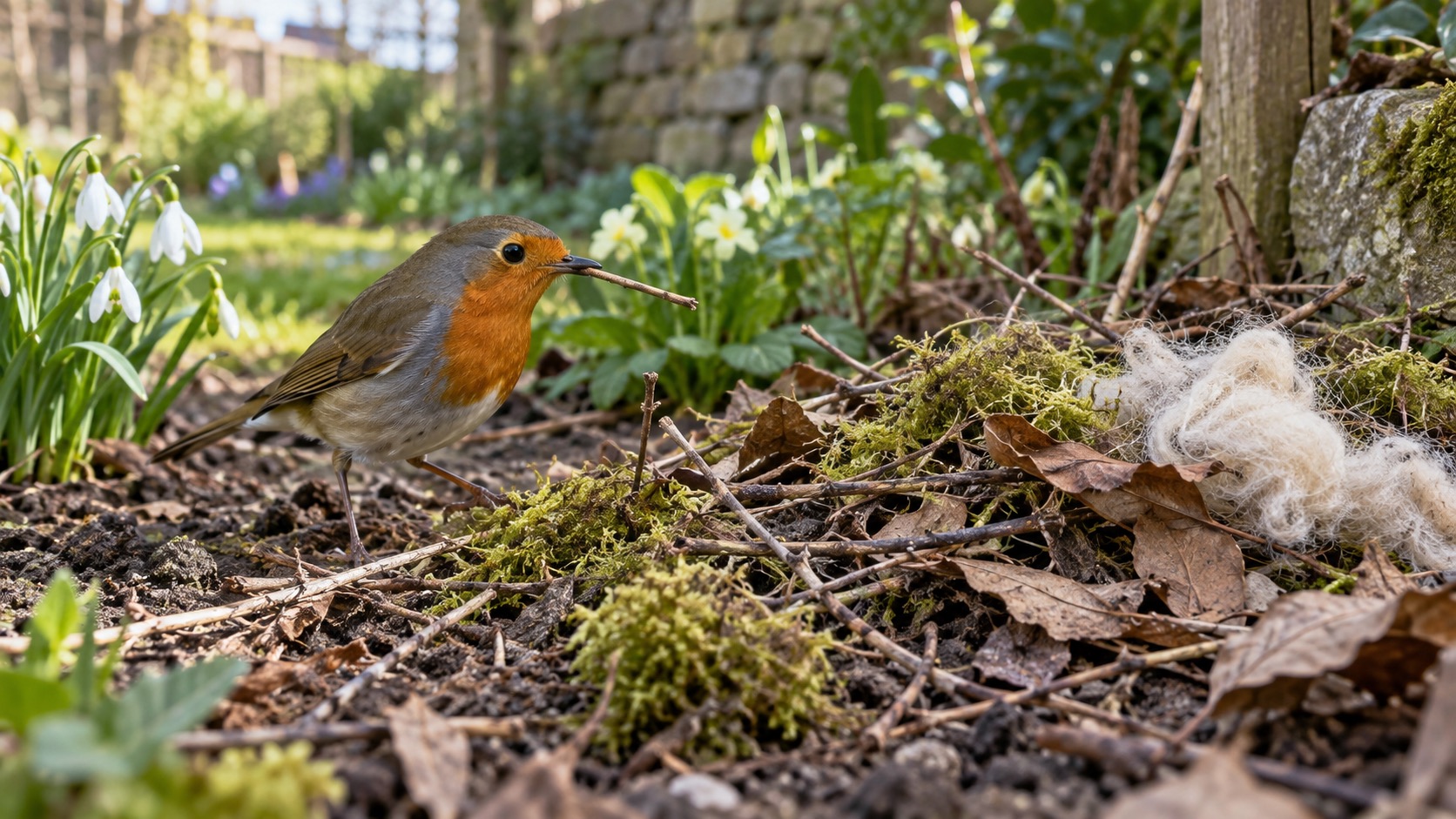
You do not need to furnish a bird's nest. Most garden birds select, carry and arrange their own materials, and different species build very different structures. If you want to help, a varied garden with untidy corners, safe vegetation and natural fibres is usually more useful than a bought bundle.
When are birds looking for nesting material?
Many resident garden birds begin serious nest building in spring, although timing varies with species, weather and location. Some birds inspect cavities much earlier, while others have more than one brood. Do not treat a calendar date as permission to interfere with a nest.
If you see a bird carrying stems, moss or feathers, watch from a distance. Avoid cutting the hedge or pulling apart the planting it is using. A nest being built is already protected in many circumstances; current law and exceptions vary across UK jurisdictions.
What natural material helps?
Short dry grasses, small amounts of moss, fine plant fibres and fallen leaves can be useful where birds can select them for themselves. Shrubs and climbing plants also provide structure and shelter, not just raw material. Some species use mud: house martins and swallows gather it for their cup nests, so a safe patch of damp earth can help in dry conditions.
The RSPB's spring-garden advice encourages habitat that lets birds find what they need. Do not scrape moss from sensitive places or strip a hedge bare in the hope of attracting a nest.
Is wool safe to offer?
A small quantity of clean, natural sheep's wool can be offered in short, loose pieces if you wish. Wildlife World sells a packaged nesting-wool dispenser through Amazon, and RSPB sells a direct refill. Both are optional, not essential purchases. Check that the material has not become wet, dirty or tangled, and remove unused material responsibly when appropriate.
Do not cram wool into a mesh bag with long loops that could trap feet or beaks. A bird may choose some fibres and ignore the rest. That is fine; the aim is choice, not to force a particular nest lining.
Which materials should you avoid?
Avoid string, thread, fishing line, plastic fibres, synthetic fluff and dryer lint. Long strands can entangle birds or chicks; lint can mat and behave unpredictably when wet. Do not offer hair from pets treated with flea or tick products, and do not assume any loose dog hair is automatically safe.
Never put cotton wool, shredded fabric or bedding inside a nest box. It can retain damp and removes the bird's choice about how to build. If a box is dry, well positioned and suitable for the species, leave its interior empty.
Should you help house martins or swallows differently?
These birds build mud-based cups, so ordinary grass bundles are not the main issue. If they are active locally, a small safe supply of damp earth in dry weather may be useful. Artificial cups can also be considered, but they require species-specific placement: house martins use enclosed cups beneath exterior eaves, while swallows commonly use open cups inside accessible outbuildings.
Do not remove an existing mud nest or spray water at an active structure. If a nest appears damaged or young are at risk, seek specialist wildlife advice rather than trying to rebuild it by hand.
How do you offer material without attracting trouble?
Keep the offering modest and away from cat cover and busy human routes. A large pile can become wet, mouldy or blow around the garden. Natural planting spreads material through a habitat instead of concentrating it into a damp container.
Do not hang a nest-material holder immediately beside an occupied box. Repeated visits and movement there can cause disturbance. Our nest-box placement guide explains why a quiet approach is important.
Frequently asked questions
Should I put hay inside a bird box?
No. Leave the interior empty. Birds choose their own mix of materials and can reject or remove anything you add.
Are feathers helpful?
Some species collect feathers, but there is no need to buy or place them in a nest. Let birds choose naturally available clean material.
When should I stop offering wool?
Remove a supply if it becomes wet, dirty, tangled or unused for long periods. Avoid disturbing birds that may already be nesting nearby.
Helpful products
Optional natural-fibre supplies
Natural plants and a safe garden are the foundation. If you offer wool, let birds draw only small amounts, inspect the supply for damp or tangles, and never fill a nest box yourself.
Wildlife World British Nesting Wool
Best for: A small, dry optional supply birds can draw from themselves
Natural washed British sheep's wool supplied in a dispenser from which birds can draw small amounts themselves.
An optional packaged fibre supply when natural garden material is scarce. Drawback: inspect it for damp or tangles and never push material into an occupied box.
Refill option
RSPB nesting wool refill
Best for: Short loose natural fibres when birds are actively building
A small supply of natural sheep's wool sold as optional nesting material.
Best small optional material supply. Drawback: most birds collect their own materials; offer only short, loose pieces, never long tangles.