Buying guide
Best artificial nests for swallows in outbuildings
Choose an open swallow nest cup for a sheltered accessible building and avoid confusing it with a house martin cup or swift box.
Our recommendations
Two open swallow cups
Compare composite and terracotta cups for a genuinely accessible building. Neither is an enclosed house-martin nest or a hole-fronted garden bird box.
CJ Wildlife WoodStone swallow nest cup
Best for: A sheltered, accessible barn, garage or outbuilding
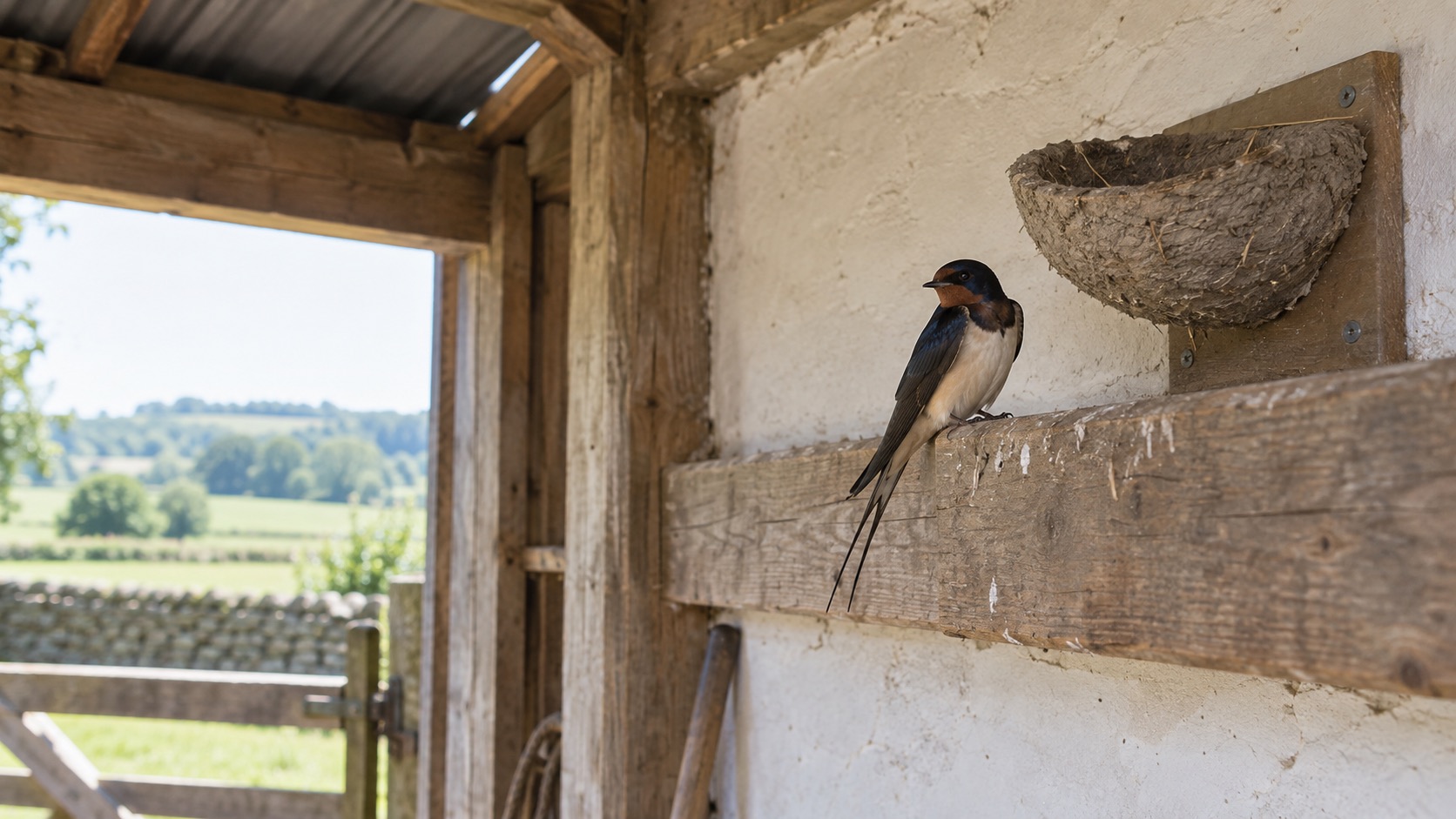
An open, rough-textured cup on a wooden backing board, made for swallows in accessible sheltered buildings.
An alternative to terracotta for a sound interior wall or beam. Drawback: it cannot help if swallows cannot enter the building throughout the breeding season.
Terracotta alternative
RSPB terracotta swallow nest cup
Best for: An interior wall or beam where swallows can enter throughout the season
An open artificial cup intended for a protected interior ledge or beam in an accessible outbuilding.
Best ready-made open cup. Drawback: it cannot replace a genuinely open entry route into a suitable building.
What artificial nest suits swallows?
Swallows build open cup-shaped mud nests, usually inside barns, stables, garages or other outbuildings they can enter. A purpose-made open artificial cup can give them a ready support. CJ Wildlife's composite cup and RSPB's terracotta cup are both designed for this role.
It is not an enclosed house martin cup. House martins typically build under outside eaves, with only a small opening; swallows need the open bowl and reliable interior access. The RSPB's identification guide makes that nest-shape difference clear.
Which cup suits the building?
The CJ cup combines a rough-textured open bowl with a wooden backboard; it may suit a flat, sound fixing point. The RSPB terracotta model is another formed open cup. Both require a sheltered surface and a dependable flight opening. Neither guarantees occupancy; swallows may prefer an existing natural nest or another part of the building.
Before buying, check the current product's dimensions, supplied fixings and mounting instructions. A projecting cup should not be attached to loose lining board or a surface that becomes hot or wet. If installation requires a ladder above hard flooring or farm equipment, arrange safe access.
What makes a suitable building?
The key is a consistent entry and exit route. A swallow cannot use a cup in a garage that is shut for most of spring and summer. The building should also have a clear flight space, protection from rain and a quiet position away from frequent human activity.
Avoid narrow openings that a bird can reach only by flying past machinery, glass or loose netting. If a building is frequently refurbished, used for storage at height or closed unpredictably, an artificial cup may create conflict rather than a useful nest site.
Where inside should the cup go?
Place it high enough to be out of routine reach, under sound shelter, with an unobstructed route in front. A wall or beam with secure fixing points is preferable to a flexible panel. Consider where droppings would land and whether people or animals pass beneath.
Do not fix the cup directly next to an active nest simply because the first site is proven. Existing nests must not be disturbed. The RSPB's 2026 guidance notes that swallows often nest inside buildings while house martins commonly nest outside under eaves.
Is one cup enough?
Yes, one correctly placed cup is a reasonable start. More cups only make sense where the building has several genuinely suitable, safe sites and swallows already use the area. A cluster can increase maintenance and human disturbance if every cup is above a busy route.
If a natural nest already exists, retaining access to that site may be more valuable than adding artificial cups. Observe from a distance rather than repeatedly entering the building to check progress.
What should you avoid?
Do not confuse a swallow cup with a swift box, a house martin cup or a conventional robin box. A swift box is a closed cavity with a horizontal slot, usually mounted high on an outside wall. Our house-martin guide compares the other mud-nesting visitor.
Avoid long strands of string or netting near the nest, and do not fill the cup with synthetic bedding. Birds gather their own lining material. A nearby patch of safe, damp earth can provide mud when conditions are dry, but never create a hazardous slippery area around livestock or people.
When must work stop?
Install before the breeding season and stop alterations when birds begin using the space. Do not close off the entry route, move the cup or remove a natural nest while it is active. Birds, eggs and active nests are protected. If building repairs are unavoidable, seek appropriate local conservation and legal guidance rather than improvising.
Our nest-box timing guide explains the general seasonal principle, while the nest-box hub covers conventional garden boxes.
Frequently asked questions
Can I put a swallow cup under outside eaves?
That is usually house martin territory and calls for an enclosed martin-style cup. Swallows more often use open cups inside accessible outbuildings.
Will a cup attract swallows if none are nearby?
Not reliably. The building, local birds, insects and open access determine whether a cup has a chance of being used.
Should I remove an old nest before fitting one?
No. Existing nests may be reused, and an active nest is protected. Assess the site and any lawful maintenance only after activity has ended, with specialist advice if building work affects it.