Practical bird bath advice
How to attract birds to a new bird bath
Help birds find a new bath by checking water depth, grip, sightlines, freshness and disturbance before moving it or buying more equipment.
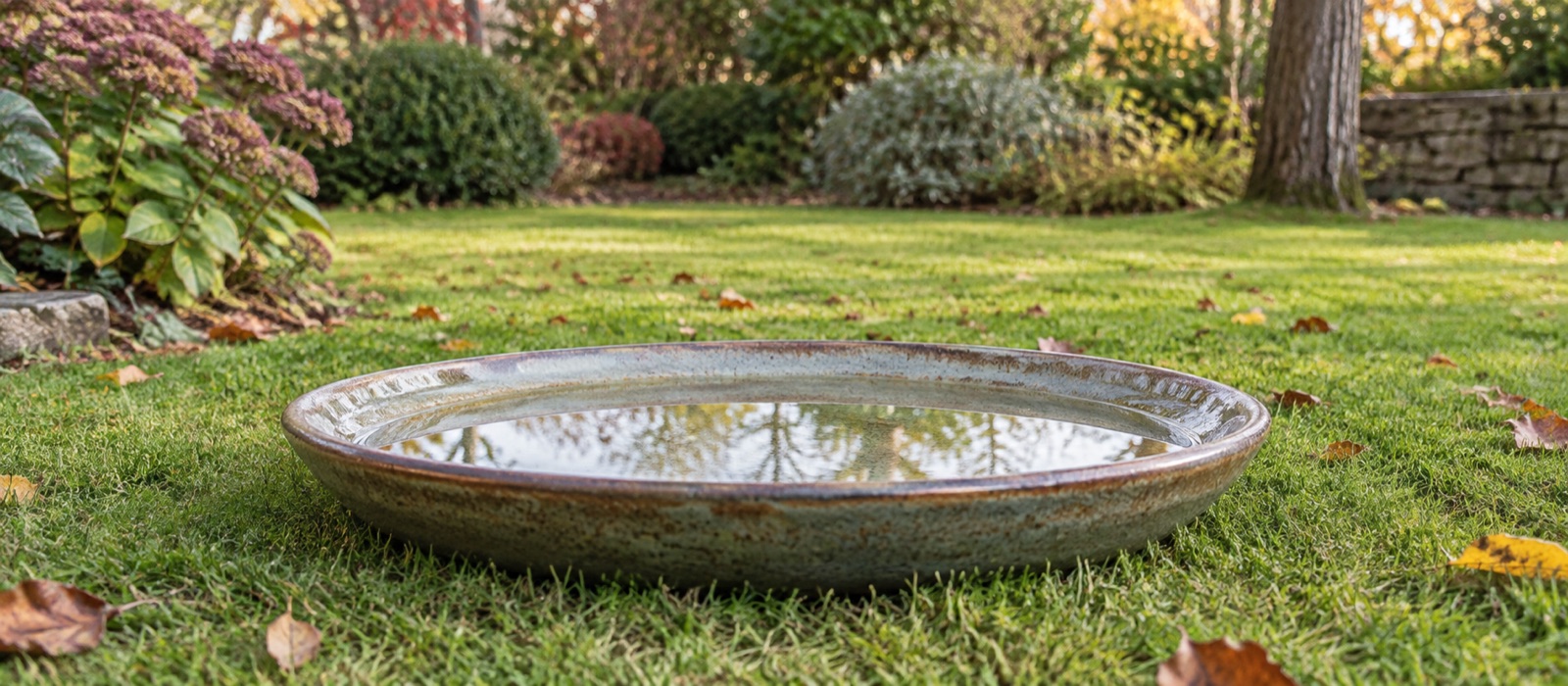
To attract birds to a new bird bath, provide clean shallow water with secure footing in a calm position where birds can see around them and escape easily. Keep the water fresh and give a suitable setup time. There is no fixed number of days before birds will use it, and food in the bowl is not a sensible lure.
Use the bird-baths hub to compare formats only after you have checked what is stopping the current setup working.
First decide whether birds can use it comfortably
| What you notice | Check first | Sensible adjustment |
|---|---|---|
| Birds approach but stay on the rim | Depth and wet footing | Preserve shallows and add stable clean footholds if needed |
| Birds avoid the whole corner | Disturbance or concealed predator access | Reassess the position rather than add food |
| The bowl is used briefly, then ignored | Water level and cleanliness | Empty, clean where needed and refill |
| No birds appear anywhere nearby | Local activity and other water sources | Observe the garden before changing the bath repeatedly |
| Birds use it when you are indoors | Your distance and movement | Watch from farther away without approaching the bowl |
A bath can work even if you seldom see bathing. Birds may take a quick drink while you are elsewhere, or use it at a different time of day.
Start with depth and grip, not decoration
A deep bowl with steep sides can be awkward for small birds. Inspect the waterline from the edge rather than judge the whole product by its capacity.
Keep an accessible shallow approach. A few stable clean stones can help in an otherwise suitable bowl, but loose pebbles or a crowded pile are not an improvement. They must also be washed as part of the bath routine.
The RSPB's bath-design advice favours a broad shallow dish with sloping access. Our depth guide translates that into practical checks for a bought bowl.
Do not try to make slippery water grippier by adding soap or any other liquid. The shape and surface of the container need to do that job.
Review the garden around the water
A quiet position is useful, but hidden does not necessarily mean safe. Dense cover beside the bowl can conceal a cat, while completely exposed placement may leave birds far from a practical escape route.
Look from the bath towards the likely approaches. Consider low bushes, furniture, fences, windows and the routes used by dogs and people. A useful position allows birds to see danger without placing the water beside an ambush spot.
The placement guide covers those details. If you use a low bowl, the ground-bath comparison also explains current water-source advice for chloraminated tap supplies.
Move a bath only when you have identified a reason. Shifting it every morning makes it harder to understand which position was working.
Keep a reliable fresh-water routine
Replace water daily rather than top up yesterday's contents indefinitely. Remove visible droppings, leaves and mud sooner, and give the bowl a thorough weekly clean.
A new bath can pick up dirt quickly if a feeder hangs above it, mowing throws debris into it or a plant sheds leaves at the rim. Change those conditions instead of assume birds dislike the product.
Follow the bath-cleaning routine. If algae is recurring, use the algae guide to review light, organic debris and water replacement. A clear-looking bowl still needs maintenance.
If you see sick or dead birds, empty the bath and follow current BTO disease and hygiene guidance before reintroducing it. Do not keep a shared water station open simply because birds have begun using it.
Would moving water help?
Gentle dripping or moving water can draw attention: The Wildlife Trusts suggests a simple dripping arrangement as one option. It is not necessary for a bath to be useful and does not guarantee visits.
A solar fountain adds equipment, cleaning and water-loss checks. Spray that blows out of the bowl may reduce useful water rather than improve it. Start with a working still-water setup before deciding whether a pump is worth the extra maintenance.
If you genuinely want one, compare solar bird-bath fountains. Use a low manageable movement and ensure birds can still stand and reach the water.
When changing the bowl is worthwhile
A replacement makes sense if the existing bath has an unmanageable depth, unstable base, sharp damage or a finish that cannot be cleaned properly. It does not make sense simply because birds have not arrived within a few days.
The AnyPlace ceramic dish is a broad low alternative with a listed 35cm diameter, sloping sides and one-litre capacity. It needs full support and a check of wet grip. Choose it only if those features address the actual problem.
For small areas, the small-garden guide compares low and hanging options. A clean shallow homemade dish may also be enough; our DIY bath guide explains how to set one up.
Frequently asked questions
How long does it take birds to find a bird bath?
There is no dependable timetable. Local bird activity, weather, alternative water and the position all affect use. Judge the setup by its safety and maintenance, not a promised waiting period.
Should I put seed or mealworms in the water to attract birds?
No. Keep food and water separate. Food residue fouls the bowl and makes cleaning harder.
Why do birds drink but not bathe?
Drinking is still a useful use of the bath. Do not deepen the water simply to encourage bathing; preserve safe access and allow birds to choose.
Is a bright colour putting birds off?
Do not assume colour is the cause before checking depth, footing, disturbance and position. A product's appearance cannot overcome an unsafe approach.
Helpful products
A straightforward shallow dish
If your existing bowl is too steep or awkward to maintain, this broad ceramic dish is one alternative. A new product cannot fix an unsafe position.
Wide shallow water dish
Jacobi Jayne AnyPlace ceramic bird bath
A low ceramic dish with sloping sides, a stated 35cm diameter and 1-litre capacity.
For a wide, low water dish on a stable surface. Its listed 35mm overall height is not a measured water depth; check grip and usable shallows before filling.