Bird bath guide
Best ground-level bird baths
Choose a low bird bath with shallow access, a stable bowl and a safe open position. Compare the Aristotle Oasis and AnyPlace ceramic dish.
Our recommendations
Two low-level baths with different strengths
Choose the access profile and material that suit your garden, then check the water source and cleaning routine.
Stepped composite bowl
Wildlife World Aristotle Oasis bird bath
A low-level bath and drinker with stepped access, made from Wildlife World's recycled plastic-and-clay composite and supplied with a stated ten-year guarantee.
Best low-level wildlife-friendly design. Drawback: ground-level water needs particularly careful siting away from places where cats can hide.
Wide ceramic dish
Jacobi Jayne AnyPlace ceramic bird bath
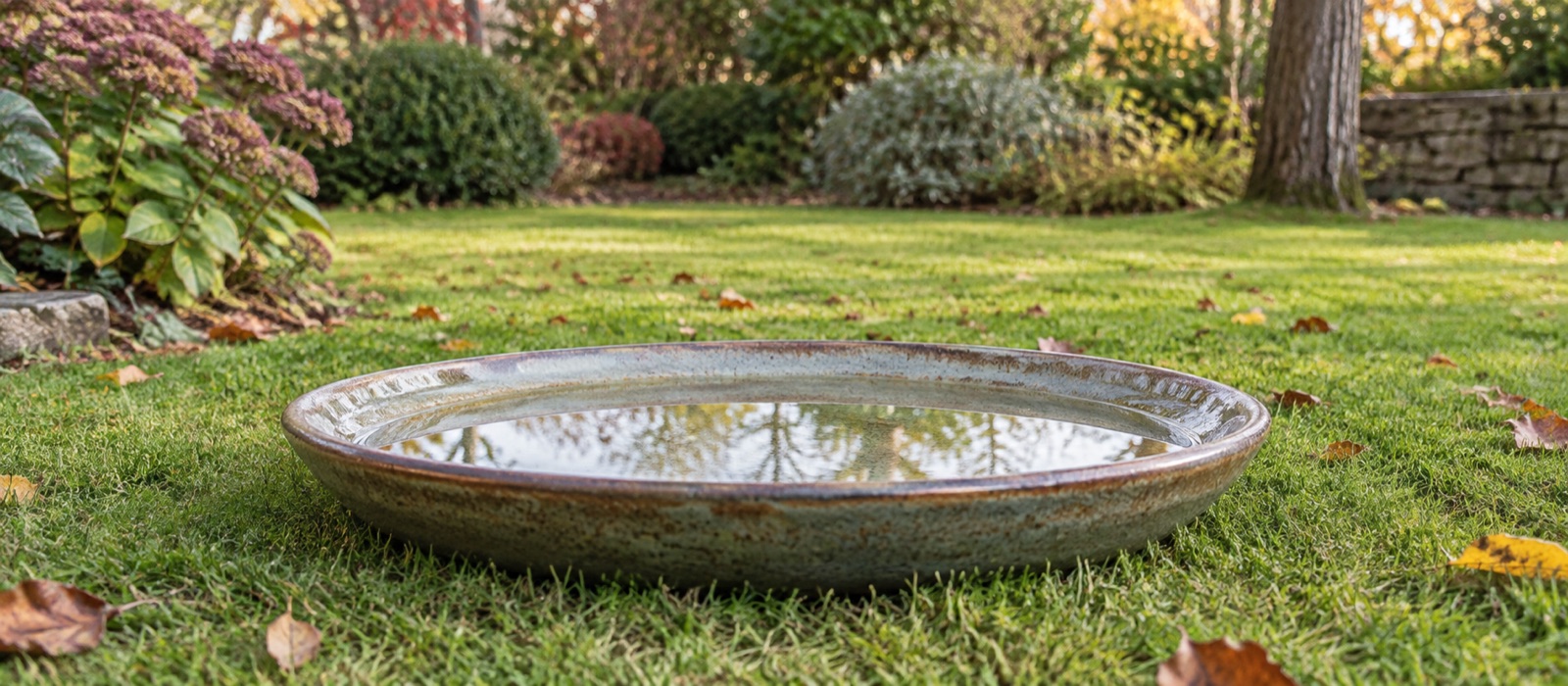
A low ceramic dish with sloping sides, a stated 35cm diameter and 1-litre capacity.
For a wide, low water dish on a stable surface. Its listed 35mm overall height is not a measured water depth; check grip and usable shallows before filling.
A ground-level bath is about easy access to water, not an excuse to put a deep bucket on the lawn. Some birds may approach a low dish readily, but its surroundings matter as much as the bowl.
This guide covers bowls intended for low placement. If you need water lifted off a patio, compare pedestal baths instead. The bird-baths hub brings both approaches together.
What makes a useful low bird bath?
| Check | What to look for | What to avoid |
|---|---|---|
| Access | A low rim and graduated shallows | A tall vertical wall |
| Footing | A surface birds can grip | An entirely slick, steep interior |
| Position | Flat, open ground with clear sightlines | Long grass or concealed cat routes |
| Maintenance | A bowl you can lift, empty and scrub | A heavy dish you cannot handle |
| Water | A suitable clean source and frequent replacement | Stagnant rain collected in a dirty container |
A low bath need not sit directly in soil. A firm paving slab can give the bowl a level seat and keep muddy grass away from the rim, provided it does not leave an unstable overhang.
Aristotle Oasis: stepped access rather than a sheer edge
The Aristotle is a low-level bath and drinker made from Wildlife World's recycled plastic-and-clay composite. It is not a solid stone or glazed ceramic bath, even if its earthy appearance suggests those materials.
The stepped profile is its strongest practical feature: birds have more than one approach to the water instead of a single steep drop. Check the actual filling level and exposed footholds after setting it down; do not submerge the useful access simply to fit in more water.
Choose it when you want a low bowl with an access-led design. Its advertised material guarantee belongs to the supplier and its terms, not a guarantee against every form of damage or freezing. The winter-bath guide explains why easy emptying still matters.
AnyPlace ceramic: a broad dish for a simple setup
The Jacobi Jayne AnyPlace has a stated 35cm diameter and one-litre capacity, with sloping sides. Its listed 35mm overall height should not be confused with a measured maximum water depth.
This is a useful option where there is room for a wide dish but no need for a pedestal. A broad flat seat matters: the ceramic should not be balanced across two uneven bricks or squeezed into a flowerpot where its base rocks.
Check the wet interior for grip. If you add clean stones, keep them stable and leave useful open water. A collection of loose pebbles that shifts under a bird is not an improvement. See how deep a bird bath should be for the difference between a shallow edge and a deep centre.
A low bowl is not right for every garden
Watch the proposed position before buying. Cats may wait behind pots, under shrubs or at the edge of long grass. A wide clearing helps birds see what is approaching, while reachable escape cover should not become a hiding place immediately beside the bath.
A busy dog route, frequently mown patch or children's play area can also be a poor fit. Moving water a little away from daily disturbance may be more useful than choosing a larger product. The placement guide helps assess these trade-offs.
Do not solve a bad location by buying a taller bowl and assuming predators can no longer reach it. Reconsider the whole position.
Check whether your tap water is chloraminated
RSPB water guidance makes a specific distinction for chloraminated tap water: use an elevated bath, or collected rainwater for a ground-level bath. Check with your water company if you do not know how the local supply is treated.
If using rainwater, collect it in a covered water butt that excludes mosquitoes, as the RSPB advises. Do not use dirty water from an open bucket or treat stored rainwater as automatically clean. Follow the current advice for your supply and setup rather than assume all UK tap water has the same treatment.
Keep the dish separate from feeding
Use the bath for water only, even if a retailer also describes it as a feeder. Food left in a shared water bowl complicates cleaning and spoils quickly.
Check daily for mud, fallen leaves, droppings and a falling water level. Replace the water rather than keep topping up the old contents; give the bowl a weekly clean following the cleaning routine. A low bowl is often easier to remove completely, so use that advantage.
Frequently asked questions
Will robins use a ground bird bath?
They may, but there is no guaranteed species response. A calm accessible position and clean water are more important than a picture of a robin on the packaging.
Can a ground bath go on gravel?
Only if it is seated level and cannot rock or settle unevenly. Give the base full support rather than perch it on a few large stones.
Why is my new low bath not being used?
Birds may need time to find it, or the position, grip and depth may be unsuitable. Our new-bath troubleshooting guide gives a sensible order for checking those issues.