Practical feeding advice
How to keep slugs away from ground bird food
Reduce slugs around bird food with smaller daytime portions, prompt cleanup and wildlife-friendly changes—without salt or unsafe barriers.
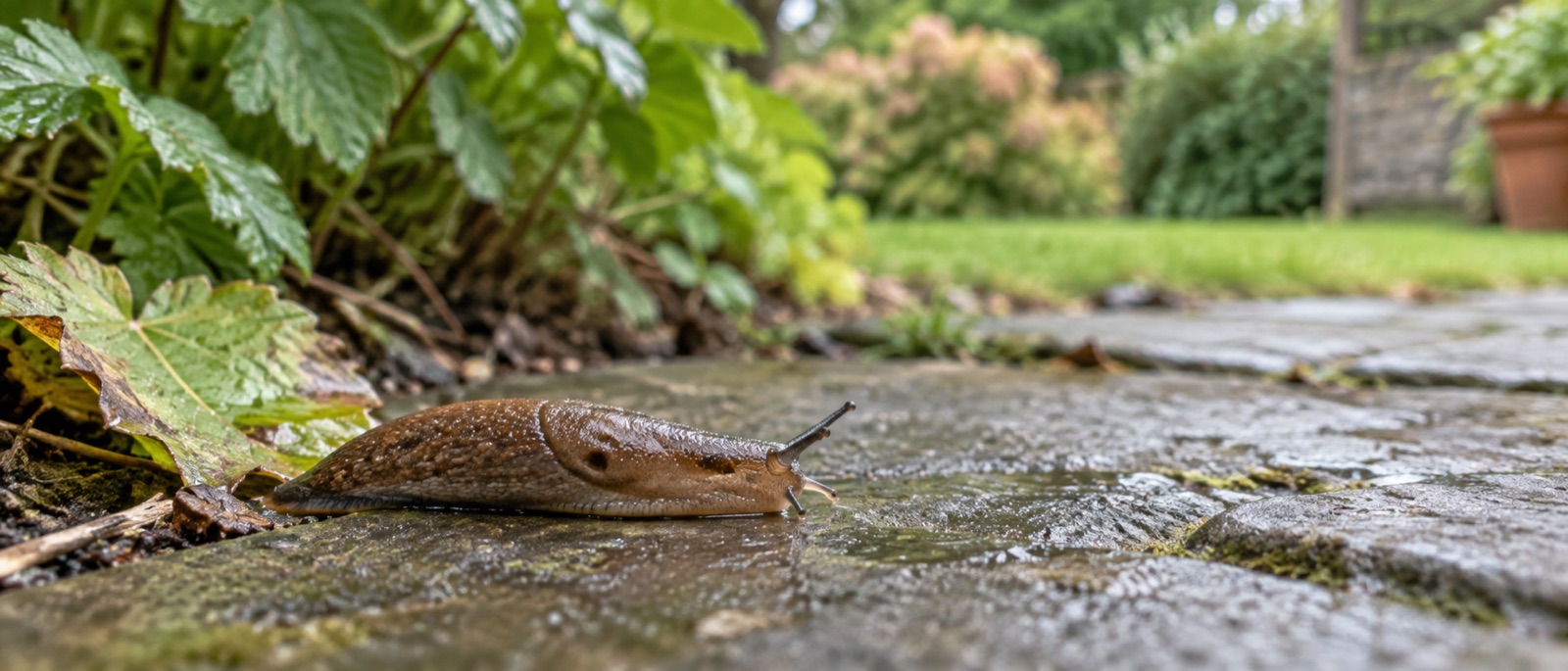
To keep slugs away from bird food, remove leftovers promptly and stop leaving food outdoors overnight. Do not scatter seed on the ground or surround a feeding spot with salt, chemicals or sticky barriers. If slugs repeatedly reach a small mealworm portion, pause that ground-feeding spot rather than trying to make the whole garden slug-free.
A slime trail beside yesterday’s food is a reason to change the routine, not to buy stronger slug control. Ground-feeding birds can also find natural food among leaves and planting without congregating around a dish.
First check what you are putting on the ground
The RSPB’s current ground-feeding advice allows small amounts of mealworms that are eaten or cleared by dusk that day. It does not recommend scattering other foods on the ground. Its advice also rules out flat feeding surfaces, including the trays sold with many ground-feeding kits.
That changes the answer to a familiar question. A tray full of seed does not become a good feeding arrangement merely because a copper strip keeps some slugs away. Remove the unsuitable food and tray first.
If you want to help robins or blackbirds, our food guide for ground-feeding birds explains the options and their limits. Keep any supplementary mealworm portion small enough to clear easily; do not hide it deep in leaf litter.
What the signs can—and cannot—tell you
| What you notice | What to check | Sensible next step |
|---|---|---|
| Slime beside food left overnight | Whether leftovers were cleared before dusk | Remove the food source and clean the spot |
| A slug on a small mealworm portion | Whether birds are actually eating while you watch | Clear it; try less food at a busier daytime moment or pause |
| Slugs below a hanging feeder | Edible spills, damp waste and sheltered debris | Clear food waste without stripping the garden of wildlife habitat |
| Slugs inside equipment | The route up supports, foliage or nearby structures | Empty, clean and reassess the feeding position |
| Food disappears but there are no clear signs | Other animals, weather or daytime visits | Do not identify the culprit from disappearance alone |
Height on its own is not a dependable solution: slugs can reach surfaces above ground. A raised flat dish also remains a flat feeding surface. Changing the shape of the problem is not the same as fixing it.
A practical daytime routine
Choose a moment when the intended birds are already nearby, not just before you leave for work or go to bed. Put out only a modest amount, stand back and watch without crowding the birds. Clear the remainder when visits finish, and always before dusk.
After damp weather, inspect the spot before offering anything else. Remove yesterday’s food rather than placing fresh food over it. If you cannot distinguish food from wet leaves or soil, the location is too awkward for repeat supplementary feeding.
Our dried-mealworm guide covers quantities, seasonal use and the difference between dry and soaked portions. Food that has been wetted needs particularly close attention; do not leave a bowl soaking outdoors as an all-day buffet.
Keep the wider garden welcoming. Leaf litter, shrubs and undisturbed patches give birds opportunities to forage naturally. Clear the feeding spot, not every leaf from the garden.
Cleaning the spot without spreading dirt
On hard paving, lift loose food and debris carefully. Dampen contaminated material before cleaning so you do not raise dusty droppings. Use equipment dedicated to outdoor feeder care, wear suitable gloves and wash your hands afterwards.
A dustpan and brush can collect dry loose spills; they are less useful for wet food pressed into joints or soil. Do not sweep waste into a border where wildlife can reach it again. Follow the under-feeder cleaning guide for different surfaces.
A small indoor portion container makes it easier to avoid tipping out far more food than birds will use. Its job is measuring and storage, not stopping slugs. Keep it closed and indoors, with outdoor leftovers kept away from the fresh supply.
Why not salt, copper or slug pellets?
Do not put salt around bird food, add chemicals to a feeding surface or coat access routes with grease. Nor should you use a bird-feeding problem as a reason to spread slug pellets around the food. The useful intervention here is reducing access to leftovers.
The RHS explains that slugs are normal, valuable garden wildlife. Its garden-realistic barrier study did not find reduced plant damage from copper tape, eggshells and several other commonly suggested barriers. That is not a direct test of bird-feeder protection, but it is a good reason not to promise these products will solve this problem.
If a slug needs moving from equipment, gently relocate it to another suitable part of your own garden. Do not scatter injured slugs as bait for birds or take them to somebody else’s property.
When to stop using that feeding spot
Pause if slugs keep reaching the food, if leftovers are hard to retrieve or if rats and mice also visit. A smaller portion is worth trying only where you can watch it being used and clear it properly.
For seeds and peanuts, follow the current seasonal guidance: November–April in appropriate hanging feeders, not year-round ground scattering. Slug trouble is not a reason to change that.
Frequently asked questions
Will slugs eat bird food?
They can reach food left within their range, but a slime trail alone does not prove which food they ate. Treat it as a sign to remove leftovers and inspect the feeding spot.
Can I use a hanging feeder instead?
For food and birds suited to that format, yes. It still needs regular cleaning and spill control, and hanging it does not guarantee slugs cannot climb to it. Do not force a ground-foraging bird to use an unsuitable feeder.
Is copper tape safe around a bird-food dish?
Do not rely on it to rescue an unsuitable flat dish. Remove the feeding surface and excess food rather than buying an unproven barrier.
Should I stop feeding robins altogether?
Not necessarily. Support natural foraging first, and offer any suitable supplementary food in small, manageable amounts. If you cannot keep that spot clean and clear leftovers, pausing is the better choice.
Helpful products
Useful tools for portions and clearing spills
Reduce leftovers before buying a deterrent. These help with food handling and cleanup; neither is a slug treatment.
Clear dry spills
Spear & Jackson dustpan and hand brush set
A deep outdoor dustpan with a reinforced front edge and a wooden-handled brush with stiff bassine bristles for collecting seed husks and light garden debris.
For loose, dry spills on hard paving, not scraping contaminated dust into the air. Dampen dirty areas before cleaning and keep this set outdoors for feeder use only.
Measure a small portion
DEAYOU 2.8L bird-seed pour container
A 2.8L clear plastic dry-food container with a three-sided locking lid, silicone seal, handle, measuring cup and pour spout.
A 2.8-litre indoor container to portion dry food instead of leaving an open bag near the feeding area. It is neither a slug barrier nor a pest-proof outdoor store.