Practical feeding advice
How to keep ants out of bird feeders
Keep food and storage clean, trace the access route and avoid chemical or sticky barriers around birds in an ordinary UK garden.
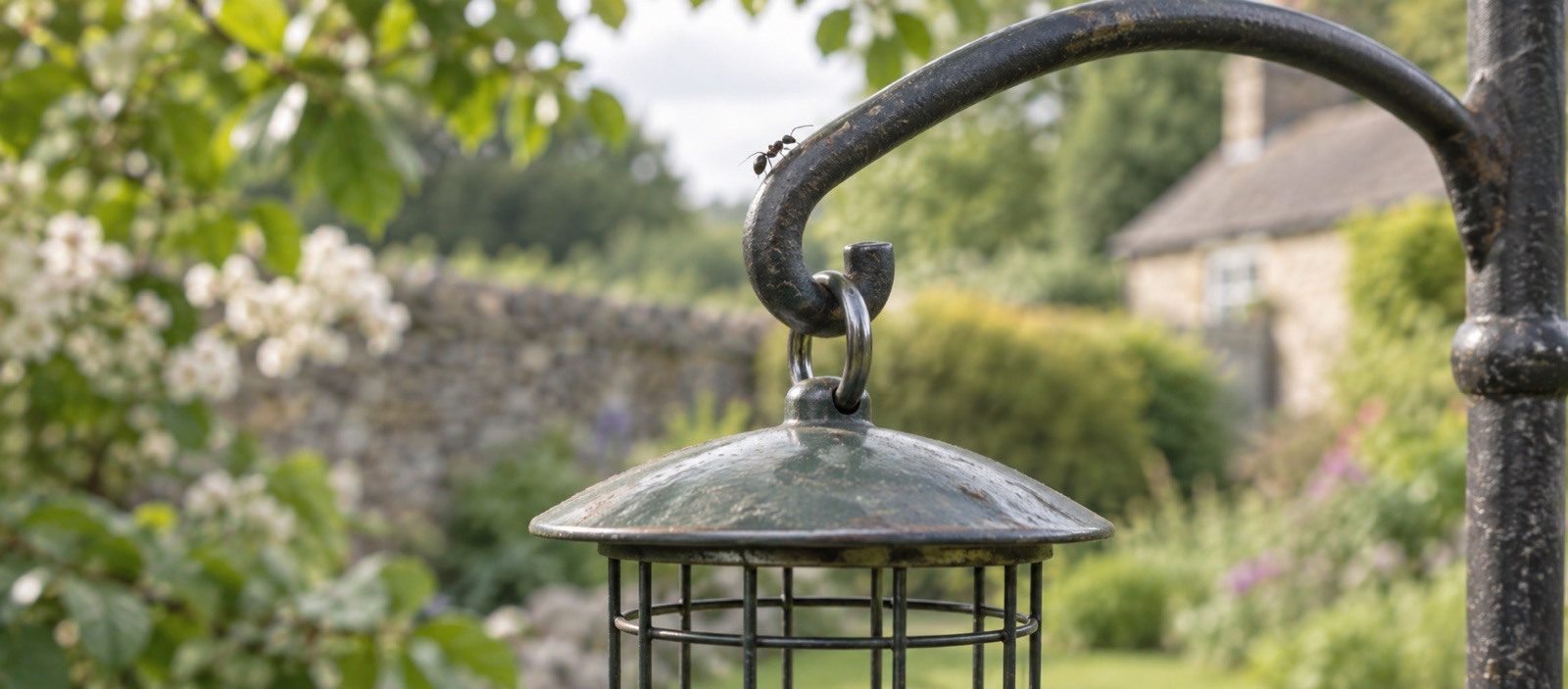
To keep ants out of bird feeders, remove food crumbs and sticky residues, clean and dry the equipment, and store the supply in a closed container indoors. Check whether ants are actually reaching the food or simply crossing the pole. Avoid insecticide, grease and sticky barriers around feeding birds; a few garden ants do not justify destroying their nest.
In a UK garden, this usually concerns ordinary seed, suet or mealworm equipment—not the hummingbird nectar feeders discussed in many overseas guides. Start with the food and access route you actually have.
Decide whether the ants are a food problem
One ant on a hanging hook is different from a trail entering a food container. Watch the route without disturbing the colony and inspect the feeder while it is safely taken down.
| Where the ants appear | What to inspect | Useful response |
|---|---|---|
| Outside the pole or hook | Whether the route reaches food | Monitor; do not treat the garden because one ant crosses it |
| Around food crumbs at the base | Spills and sticky food fragments | Remove debris and review portions |
| At a lid, seam or port | Residue, damaged fittings or poor closure | Clean and check the assembly |
| In the storage cupboard | Open packs, rims and escaped food | Seal the supply and clean the storage area |
| Throughout damp or spoiled food | Moisture and contamination | Discard affected food and clean the feeder |
Ants are an ordinary part of garden biodiversity. The RHS ant guide explains their ecological role and generally recommends leaving colonies alone unless genuinely troublesome.
The practical target is food hygiene and sensible storage, not a completely insect-free garden. Birds also forage for invertebrates naturally, so broad chemical treatment works against the wider habitat you are trying to support.
Remove the food attracting repeated visits
Look for suet crumbs stuck around a base, fragments trapped beneath a lid and edible material under the station. Clear it before refilling rather than simply wiping away the visible ants.
Offer a small portion appropriate to actual use. A feeder filled much faster than birds empty it gives you more old food to inspect and more opportunity for waste.
Keep household sweetened mixtures, jam and improvised sugary recipes out of wild-bird feeders. You do not need to provide a nectar meal for ordinary UK garden visitors.
If ants are using a route from a branch, repositioning the feeder may help you inspect and maintain it, but do not assume hanging it higher prevents an ant from climbing. A different hook is a practical change to evaluate, not an insect-proof guarantee.
Clean the feeder without leaving harmful residues
Take the feeder down and empty it. Remove lodged food from ports, catches and joints, then follow the feeder-cleaning guide.
Use equipment reserved for the outdoor bird-feeding job, not your kitchen washing-up tools. Wear suitable gloves, follow the cleaning product's directions and rinse thoroughly before drying and reassembly.
The Inspired Bird Feeder Cleaner and Sanitiser is a ready-to-use spray sold for feeder equipment. It is an optional cleaning aid, not an ant killer or a treatment to leave on a feeding surface.
Do not spray insects, soil or nests with it. Do not add it to seed or drinking water. A clean feeder should not retain cleaner where birds contact the ports.
The BTO hygiene guidance distinguishes removing dirt, disinfecting appropriately, rinsing and drying. Cleaning a trail off the outside does not replace the full routine when food inside is spoiled.
Keep the main food supply closed indoors
An open pack can be the source of the problem even when the feeder itself has been cleaned. Check the store before putting fresh food out.
Use a closed dry container with a clean rim and properly engaged catches. Do not trap old crumbs in the seal, or leave a scoop covered in food beside an open bag.
The DEAYOU 2.8-litre pour container can hold a modest indoor refill supply. Its spout makes small refills convenient, but the lid and cap still need closing after every use.
Do not call it guaranteed ant-proof, and do not leave a plastic portion container beside the outdoor station. Our bird-food storage guide explains why container materials, building security and freshness matter together.
Retain the original pack's date and storage instructions. If the stored food is wet, clumped, mouldy or visibly contaminated, discard the affected supply rather than sieve it and hope the problem is gone.
Skip the sticky barriers and chemical shortcuts
Do not coat feeder poles, hooks or rims with grease, petroleum jelly, cooking oil, adhesive or sticky gel. These put unnecessary residues near feet, feathers and food, and are not a substitute for managing the supply.
Do not dust ant powder or pesticide around the feeder, or add cinnamon, chilli, coffee grounds or other home remedies to bird food. “Natural” is not evidence that an ingredient is suitable for this use.
A hummingbird ant moat is designed for a different feeding system. Do not buy one by default for a UK seed or suet feeder without understanding the exact fit and purpose.
If ants are entering the house persistently, address that separate indoor issue with appropriate professional advice. It does not require treating every colony near the garden's bird habitat.
Check food freshness and the season
Ant activity may be easier to notice in warmer weather, but warm conditions also make food inspection important. Check softened suet, damp mealworms and moisture trapped around the feeder.
Our wet-or-mouldy food guide explains the disposal and moisture checks. Do not return affected leftovers to the main store.
Current RSPB guidance pauses seed and peanuts from 1 May to 31 October. During the warm-season pause, a suitable small suet or mealworm provision still needs careful hygiene and realistic turnover; it is not a reason to leave food unchecked.
If recurring ant contamination continues despite cleaning and storage changes, take the food down and reassess before refilling. A pause is simpler than escalating to gadgets or chemicals.
Questions about ants and bird food
Is one ant on the feeder dangerous?
It does not by itself establish spoiled food or a health emergency. Inspect the actual contents and route. Widespread contamination, moisture and stale leftovers are different from an insect walking across external hardware.
Should I throw away every bag with an ant nearby?
No. First inspect whether the bag is closed and whether insects have entered it. Discard food that is spoiled or visibly contaminated; do not assume a nearby ant means the whole unopened supply is affected.
Will a squirrel baffle stop ants climbing?
It is designed to address a much larger animal's access route, not guarantee insect exclusion. Focus on clean surfaces, closed storage and removing attractive residues.
Can I use boiling water on the nest?
Do not destroy a garden colony to solve a feeder-hygiene problem. Remove the food attraction and maintain the equipment instead; the wider garden benefits from its normal invertebrate life.
Related guide
Slime trails are a different clue from ants. Use keeping slugs away from ground bird food to reassess leftovers without adding chemical barriers.
Helpful products
Useful cleaning and indoor storage
The cleaner is for equipment and the container is for dry indoor portions. Neither is an insecticide or a guaranteed outdoor ant barrier.
Label-led feeder cleaning
Inspired Bird Feeder Cleaner and Sanitiser
A ready-to-use 500ml trigger spray sold specifically for cleaning feeders, bowls and feeding-station equipment.
A ready-to-use feeder-cleaning spray for equipment, used and rinsed according to the label. Not an ant killer, nest treatment or food additive.
Sealed indoor portions
DEAYOU 2.8L bird-seed pour container
A 2.8L clear plastic dry-food container with a three-sided locking lid, silicone seal, handle, measuring cup and pour spout.
A sealed 2.8-litre container for dry indoor portions. Keep the rim clean and closed; do not describe it as a guaranteed insect-proof outdoor feeder.