Practical advice
Open-fronted vs hole-entrance nest boxes
Understand which UK garden birds use an open-front nest box, which use a round entrance and how placement changes the choice.
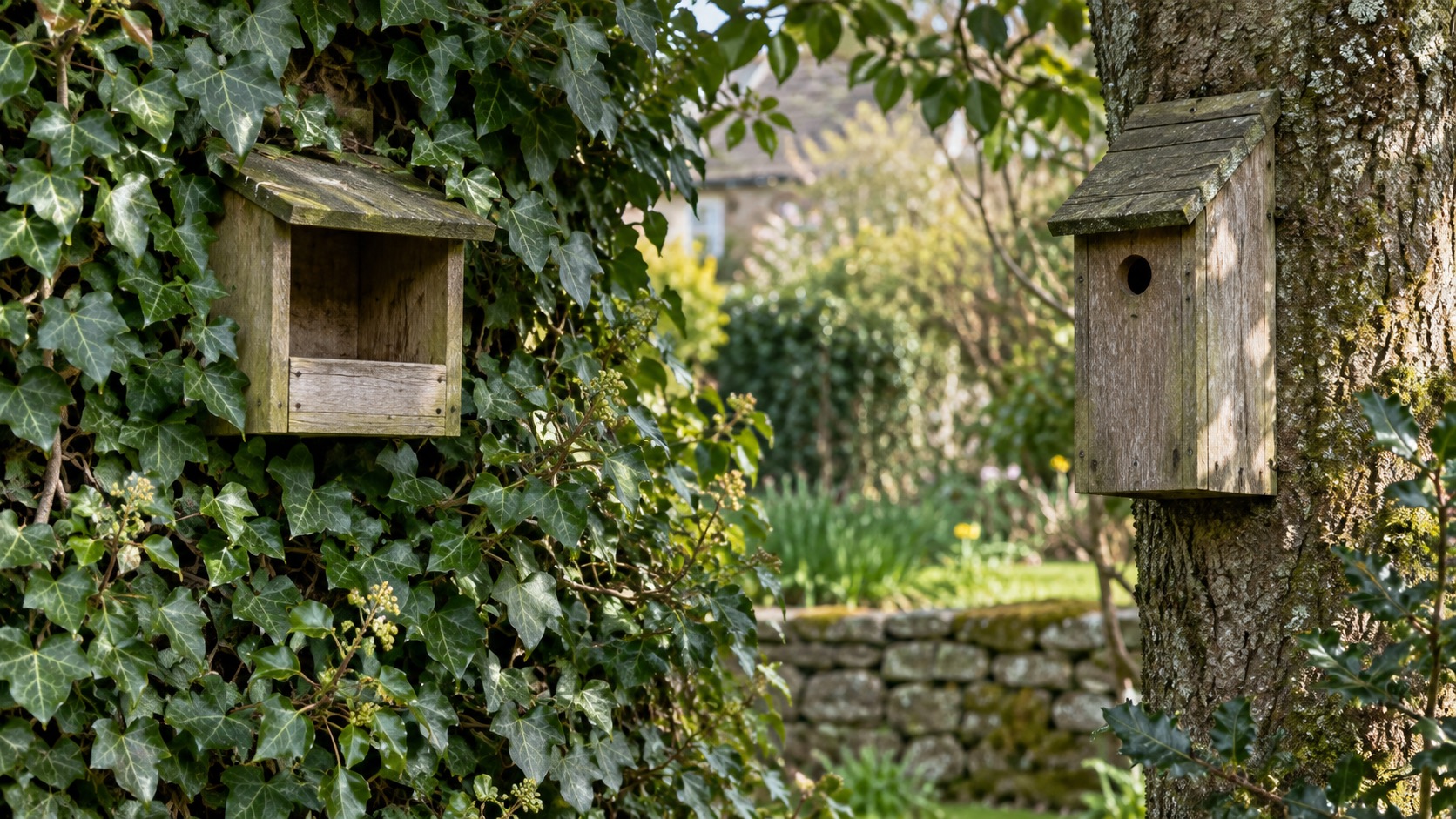
If you are choosing between an open-fronted and a hole-entrance nest box, start with the bird you hope to help. Robins and some wrens need an open, deeply sheltered approach. Tits and sparrows typically use a round hole of suitable size. The opening is not a decorative detail: it changes both who can enter and how much shelter the nest receives.
Which birds use each style?
The BTO nest-box guide separates small-hole boxes for tits and sparrows from open-front boxes for robins and spotted flycatchers. Wrens can also investigate well-concealed open-front sites. A starling needs a larger cavity and opening than a standard small-hole box; swifts and martins need quite different specialist structures.
Our hole-size guide covers 25mm, 28mm, 32mm and larger entrances. Do not force every species into one “universal” box. A label saying “wild bird house” does not tell you whether a robin can use the entrance or a great tit can fit.
What does an open front change?
An open front allows species that do not use a small circular hole to enter. It also leaves the chamber more exposed to rain, wind and predators. That is why a robin box displayed on a bare post often fails the most important siting test despite having the correct opening.
Place an open-front box within mature ivy, dense shrub growth or a suitable quiet outbuilding. The opening should be hidden from casual view but not blocked by leaves. Inspect how a cat could reach it from a fence, branch or shed roof. Our robin-box choices and wren-box choices explain the different sites.
What does a round hole change?
A round hole gives a more sheltered entrance and restricts the size of bird that can enter. Smaller holes may favour smaller tits, but they do not guarantee exclusive use. A 32mm opening accommodates more common hole nesters than a 25mm opening and can invite competition.
Check the chamber, roof, wall thickness and cleaning access alongside the diameter. The BTO recommends insulating material and wooden walls at least 15mm thick. A properly sized hole in a thin metal ornament is not a good nest box.
Is a convertible box worthwhile?
The Supa multi-purpose box uses a removable front section, allowing it to function as a hole-front or open-front box. That can be useful if you are still deciding which species and position are realistic. It is not permission to experiment after occupation.
Choose the format before putting the box up. Store the spare panel, inspect the resulting opening and confirm that drainage and shelter remain suitable. Once a bird starts building or visiting regularly, do not change the front until after the nesting season and only when the box is certainly empty.
Which position works for each?
Small-hole boxes generally belong in a quiet, sheltered location with a clear flight path, often around one to three metres above ground. Open fronts usually need deeper concealment and often a lower position. These are starting points; a fence top beside a cat's favourite route is poor even if the height seems correct.
For a full species comparison, use where to put a nest box. Avoid placing either type directly beside a busy feeder. A nest should not have to contend with constant traffic or spilled food that attracts predators.
What about cleaning and active nests?
Both styles should allow lawful cleaning once the box is empty. A removable floor or hinged roof is useful, provided it closes securely and keeps rain out. Check the exact design before buying; some decorative boxes cannot be opened at all.
Never open, move, convert or add a plate to an active box. Wild birds, eggs and active nests are protected. Our cleaning guide explains how to establish that a box is empty and when maintenance is appropriate.
Frequently asked questions
Can a robin use a 32mm hole?
Do not buy a standard 32mm tit box for robins. A sheltered open front is the more appropriate design.
Can a wren use a robin box?
It may investigate a well-concealed open-front box, although many wrens choose natural cavities and vegetation. Site quality matters more than the species name printed on the packaging.
Is a larger hole always better?
No. It lets more species in but may increase competition and can be unsuitable for the bird you want to help. Match the entrance to the bird and the chamber behind it.
Helpful products
Examples of the two entrance styles
The convertible Supa box makes the distinction visible; the fixed Gardman and CJ boxes show the separate formats. Set any convertible front before occupation, never while birds are nesting.
Supa multi-purpose wooden nest box
Best for: Choosing the front style before installation
A wooden box whose removable front panel changes it from a hole-fronted box to an open-fronted format, with a small base gap and cleaning access.
Best adaptable box. Drawback: changing the front is an off-season job and the selected format must match the intended species before occupation.
Gardman open-front robin nest box
Best for: Robin or possible wren sites with deep shelter
An FSC timber open-front box with a removable floor for off-season cleaning.
Best straightforward robin box. Drawback: its open front requires sheltered concealed placement and gives less physical predator protection than a hole-fronted box.
CJ Wildlife birch-log 32mm nest box
Best for: General small-hole nesters
A rustic FSC birch-log box with a 32mm entrance, rain-shedding roof and solid insulating walls.
Best natural 32mm design. Drawback: the broader entrance allows more competing species and the irregular exterior needs careful mounting.