
Practical advice
Contains affiliate links
How to deal with rust on a metal bird feeder
Inspect surface rust, corroded hangers and flaking metal on a bird feeder, and know when cleaning is not enough and replacement is safer.
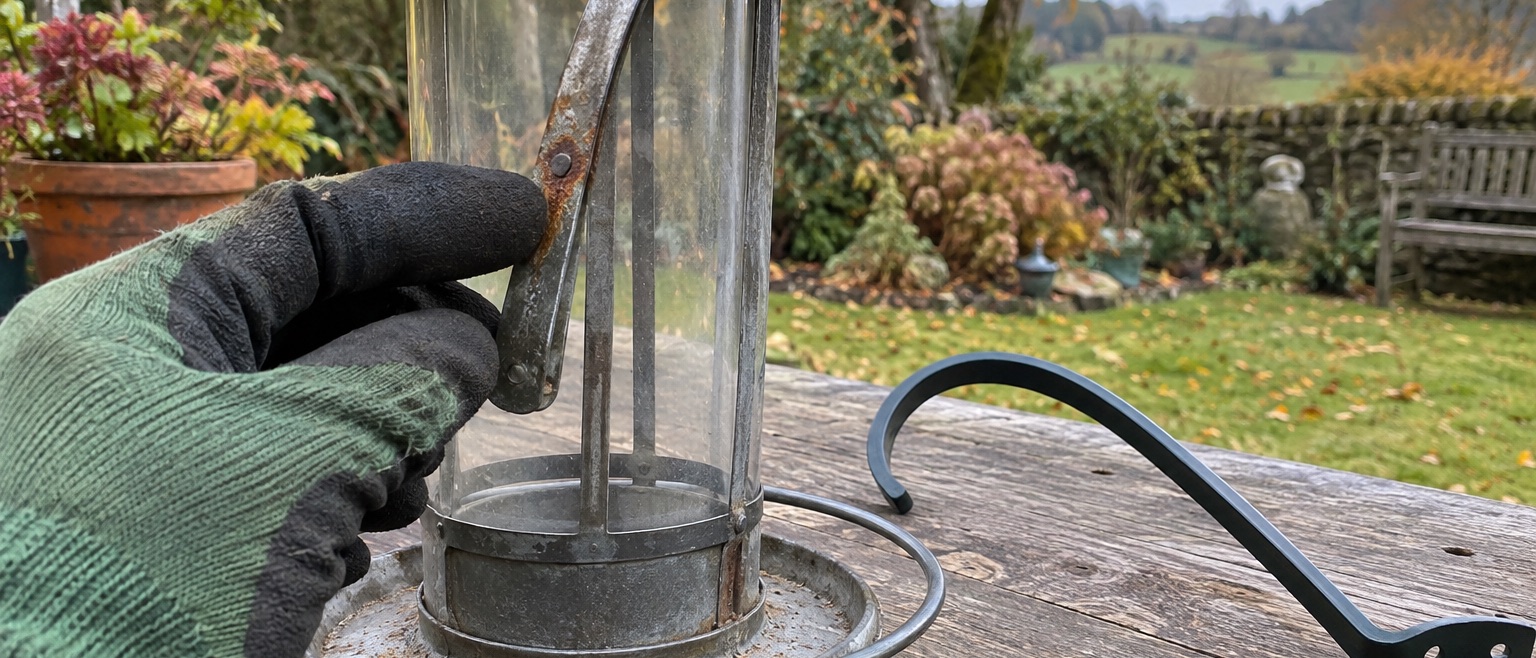
Do not apply household rust removers to bird-contact surfaces by default.
Dry the feeder fully after each weekly clean.
Check drainage and rain exposure if rust returns.
If you find rust on a bird feeder, take it down and check whether the affected metal is still sound. A small external stain is not the same as a pitted hanger, rough feeding port or flaking coating beside food. Do not fill it again until you can clean it, dry it and trust every load-bearing and bird-contact part.
Weekly washing remains essential under current RSPB guidance. It also gives you a chance to catch corrosion early. Rust is often associated with trapped moisture around joins, so inspect the base and drainage rather than polishing only the visible side.
What kind of rust is it?
| What you see | What to do |
|---|---|
| Light discolouration on a sound external bracket | Clean and dry as the maker directs; keep watching it |
| Rust at a hanger or welded support | Remove from use; ask the maker for an exact part or replace |
| Deep pitting, flaking finish or sharp edge at a perch or port | Replace the affected maker-approved part or whole feeder |
| Rust inside a seed chamber or at an inaccessible seam | Retire if it cannot be cleaned, rinsed and fully dried |
A wire brush or abrasive treatment can remove protective coating and create more exposed metal. Chemical rust converters and paints are not automatically suitable for a feeder. Do not use them on food-contact or landing areas unless the exact feeder maker approves the method and any product has fully cured according to its instructions.
A safe inspection and cleaning routine
- Empty the feeder and keep it down. Wear gloves; avoid sharp corroded edges.
- Dismantle only maker-removable parts and wash away seed dust and droppings. The full cleaning guide gives the wash, disinfect, rinse and dry sequence.
- Once dry, inspect hanger, fasteners, ports, tray, drainage and any moving guard. Press gently on suspect parts—do not hang a loaded feeder to “test” a weak joint.
- Use only a manufacturer-approved cleaning or spare-part approach. If corrosion is deep, recurring or on a critical support, replace the feeder.
How to reduce rust coming back
Keep drainage clear and choose a position that does not leave the base in standing water. Rinse cleaning products thoroughly and air-dry before storage or refilling. Inspect painted edges and fasteners at each weekly clean. If rain is soaking the food chamber, address the wet-seed problem as well as the metal.
A largely plastic, easily dismantled feeder avoids some exposed-metal cleaning work, although it still needs weather checks and replacement if plastic becomes brittle or cracks. Choose a design for hygiene and longevity rather than assuming “metal” or “plastic” alone tells you which will last longer.
Frequently asked questions
Is rust itself poisonous to birds?
The practical concerns here are rough edges, weakening, flaking material and hard-to-clean surfaces. We would not claim a rusted feeder is safe simply because birds still visit it.
Can I spray it with a general outdoor rust product?
Not by default. Check the feeder maker's instructions and the treatment's suitability for bird-contact equipment. If uncertain, replace the affected part or feeder.
Helpful products
If corrosion has made the feeder unsafe
The product below is a cleanable replacement option rather than a rust treatment. Replace exact maker-supported metal parts where possible; do not spray or coat a food-contact feeder without verified product instructions.
RSPB Classic easy-clean seed feeder (small)
A simple 500ml, two-port feeder with a polycarbonate tube and plastic fittings that come apart without tools.
Best straightforward alternative. Drawback: RSPB warns that squirrels and parakeets may damage the plastic parts.