Garden bird guide
Starlings: food, winter plumage and busy feeders
Recognise UK starlings through the seasons, understand their flocks and offer food without letting one shared feeding point become dirty.
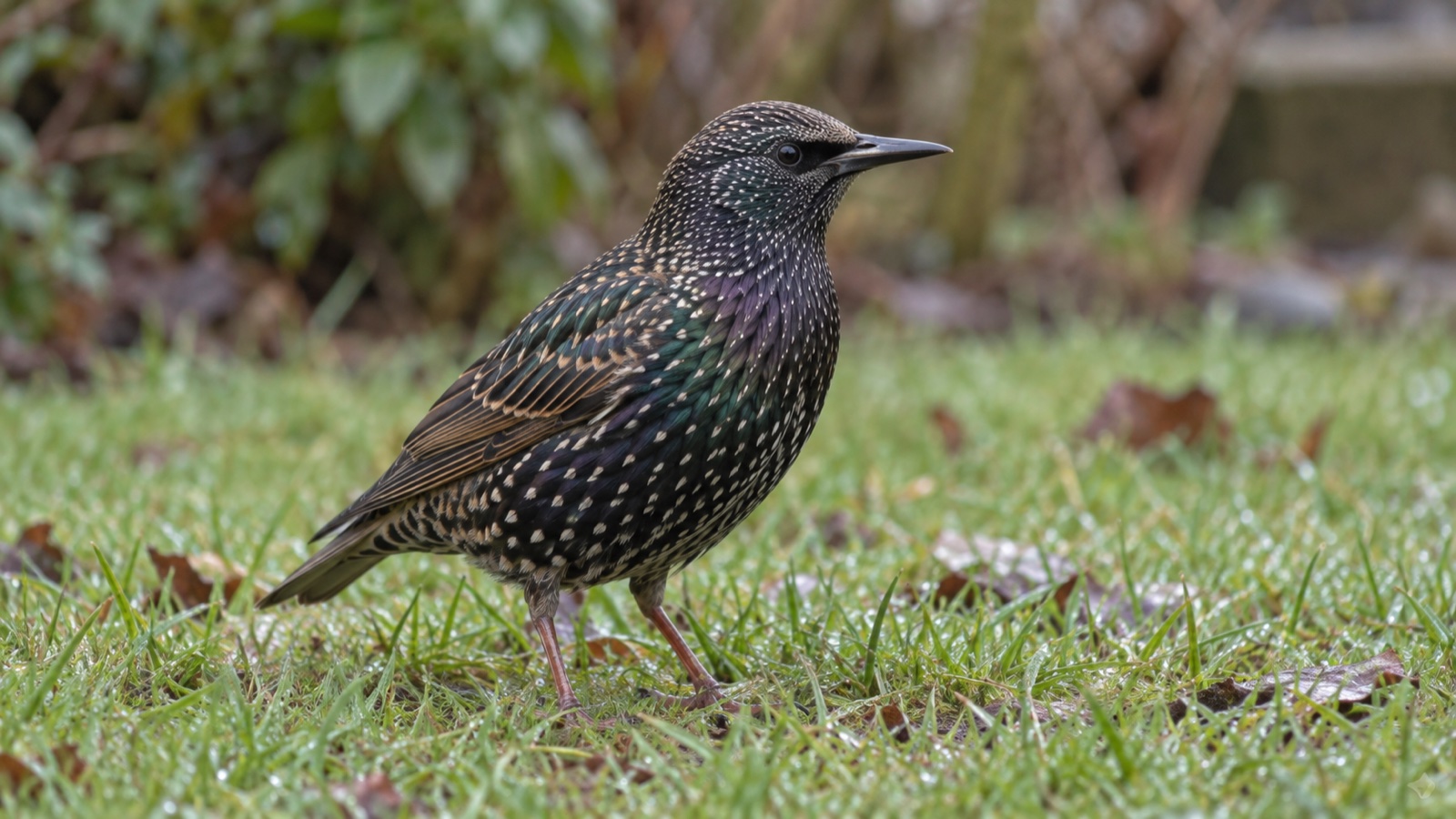
What do starlings eat? They take insects and other invertebrates, fruit and a range of other natural foods. In gardens they may investigate suitable suet or fat balls, and a group can empty a holder surprisingly quickly. Offer only an amount you can keep clean rather than trying to meet every visit with another refill. The RSPB starling profile describes their social behaviour and changing plumage.
A starling at a feeder is not automatically a problem. The practical issue is whether birds are crowding one feeding point, leaving droppings and old food, or displacing smaller visitors in a way that stops you maintaining a clean setup.
How do you identify a starling in winter?
Look for a compact bird smaller than a blackbird, with a short tail, pointed head and triangular wings. Close up, the dark feathers shine green and purple. In winter, pale spots across the body stand out and the bill is dark; in breeding plumage the bill becomes yellow and the spots are less obvious. A blackbird has a longer tail and different posture. The RSPB's photographs and recordings are more reliable than a single silhouette or generated image.
Young starlings are brown and can look unexpectedly plain. They walk and run confidently on lawns, often in company, and make a remarkable range of whistles, clicks and imitations. A noisy party on the grass is often easier to identify by movement and sound than by one dark feather pattern.
Why are there suddenly so many?
Starlings are resident in the UK, and numbers can rise in winter as birds arrive from northern Europe. Their flocking is normal. A garden that provides lawn invertebrates, fruit or a fat-food holder can become a brief stopping point. It does not mean the same birds will stay all season or that you need a larger feeding station.
The huge evening formations called murmurations happen around communal roosts rather than because a garden feeder is especially full. A dozen birds on a suet holder is a feeding flock, not a small murmuration. Starlings are on the UK Red List despite being locally common; the RSPB account explains that decline.
What food and equipment work best?
Keep natural foraging options: lawns that support invertebrates, fruiting shrubs and shallow fresh water. If you offer fat food, use a rigid net-free holder and start with a single small portion. Fat-ball formats differ in size and how easy they are to inspect. Do not hang retail netting outdoors, and remove any old or contaminated food before refilling.
Current BTO feeding guidance pauses seed and peanuts May to October and permits them November to April. That garden-wide rule still matters even when you are mainly seeing starlings. Mealworms and suitable suet can be offered with attention to spoilage. A bird table or other broad flat surface is a poor answer to flock pressure because food and droppings can meet there; the RSPB's health advice favours cleaner approaches.
How do you make room for smaller birds?
Do not assume one "starling-proof" device will solve every garden. Start by checking whether the main holder is a large, open, easy-to-crowd format. A smaller guarded feeder can let some small species feed while limiting larger access, but guardians add joints to clean and may exclude birds you hoped to welcome. Our caged-feeder guide explains that trade-off. Separate suitable feeding points can reduce a queue, but only add equipment you can maintain.
Clean beneath the station as carefully as the holder itself. A flock's fast turnover makes daily checks especially useful. BTO hygiene guidance recommends removing old food and maintaining clean water as well as washing feeders regularly. If any bird appears sick, stop supplementary feeding and follow the current advice instead of switching foods.
Do starlings use nest boxes?
They nest in cavities and may use a suitably designed box or building crevice. A small tit entrance will not fit them; buying a generic "bird box" without checking entrance and chamber size is unlikely to help. See our starling nest-box guide, hole-size reference and placement advice before making changes to a wall or roof. Never obstruct an active nest.
Are winter starlings a different species?
Usually not. The pale spots and darker bill are seasonal plumage features of the common starling, while additional birds may arrive in the UK from elsewhere in Europe.
Should I stop feeding because starlings arrive in a flock?
Not automatically. Keep portions small, avoid crowding on a dirty surface and clean the station. Stop if illness is suspected or the setup cannot be kept hygienic.
Helpful products
A manageable fat-food starting point
One net-free fat ball in a suitable rigid holder is easier to monitor than filling several feeders for a passing flock.
RSPB fat balls (six-pack)
Best for: Starting with one net-free fat ball rather than a full station
A small pack of six suet balls made with a blend that includes wheat flour, ground peanuts and seeds.
Keep in mind: Starlings may clear a holder quickly; add food only at a rate you can keep clean.