Garden bird guide
Long-tailed tits: food, identification and winter flocks
Learn why long-tailed tits travel in noisy groups, what they eat naturally and when a small, net-free suet feeder may help in a UK garden.
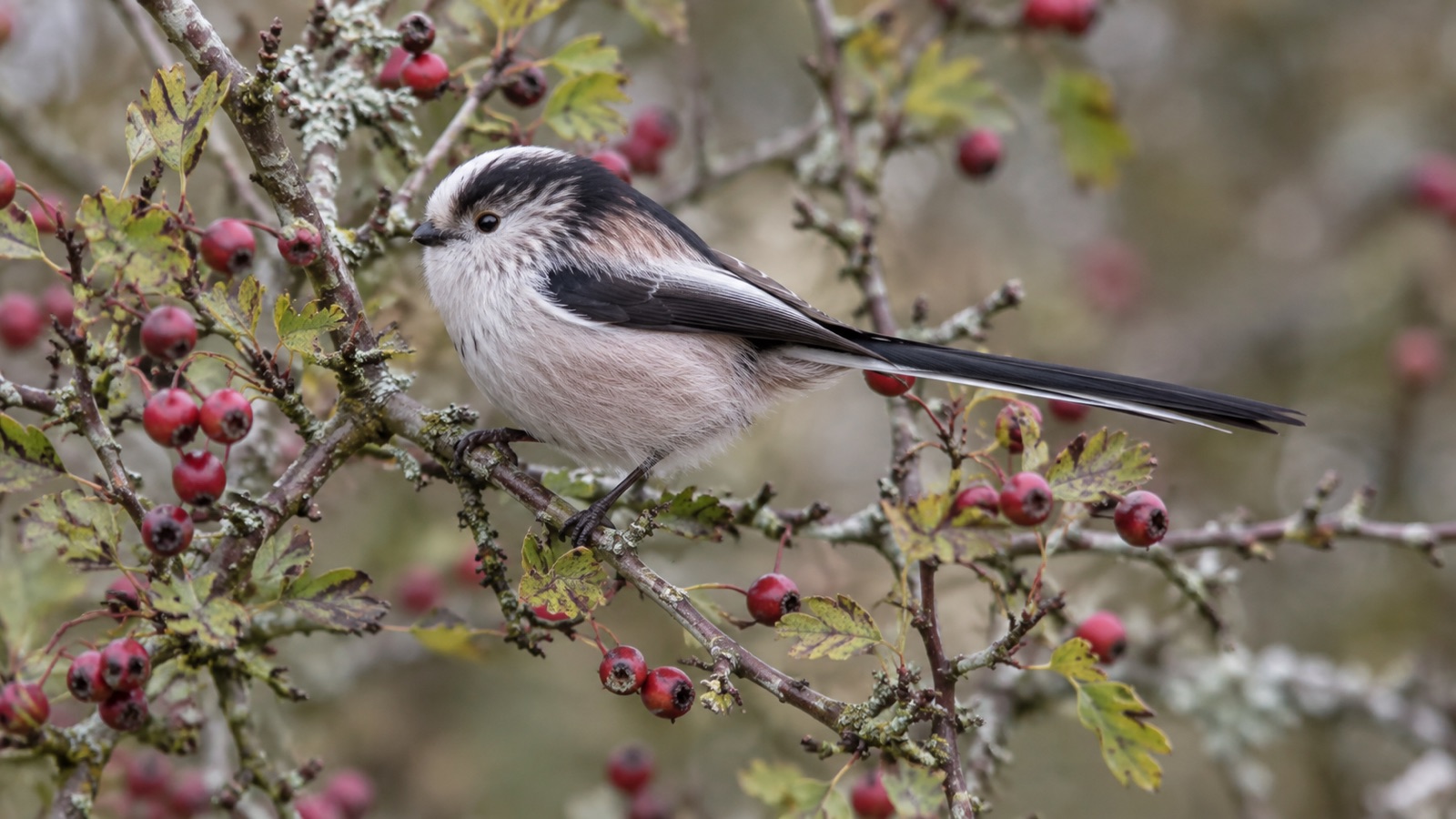
What do long-tailed tits eat? Mostly tiny insects, spiders and other invertebrates picked from trees and hedges. A garden with layered shrubs and places for those insects to live is more useful year-round than a feeder alone. In colder weather some long-tailed tits also take suitable suet. The RSPB's current nesting-season food advice names them among birds that may use suet, but that does not mean a suet block will reliably bring them to every garden.
Their visits can be fleeting: a group arrives, moves through the hedge, inspects a holder and disappears together. Wait and watch the branches before assuming a feeder is being ignored. A blue tit or coal tit may be travelling nearby, but these are different species with different proportions and behaviour.
How do you identify a long-tailed tit?
Look for a round, tiny body and a tail longer than the body, plus black, white and soft pink in the plumage. The small bill is unlike the stout seed-cracking bill of a finch. The RSPB profile also describes their bouncing flight and noisy social groups. Once you notice a procession of little birds following one another through a hedge, the shape becomes easier to recognise.
Do not use the illustration above to settle a tricky sighting. Compare it with real photographs, listen to the contact calls and watch the tail in flight. Juveniles can look different from adults, and a bird half-hidden in foliage may show only a flash of white or pink.
Why do they arrive in a flock?
Long-tailed tits are sociable birds, especially outside the breeding season. A flock moves as a unit across a patch of trees and shrubs, finding small prey in twigs and bark. You may see ten or more in a few minutes and none for days afterwards. That pattern says more about their roaming route than about the quality of your garden.
Keep connected cover where possible. A hedge that joins neighbouring trees gives a small bird food, shelter and an escape route. Replacing all shrubs with a row of feeders does not provide the same thing. The RSPB's natural-food planting guide explains how varied plants support insects through the year.
Will they use a fat-ball or suet feeder?
They sometimes take fat-based food, but offer it without retail netting in a rigid holder you can wash. The fat-ball feeder guide compares compact and guarded designs; the fat-ball food guide helps you choose a pack that will not sit around after the flock moves on. A small holder is often enough for an occasional visitor. Do not hang several large fat balls to target birds you have seen once.
Current RSPB feeding guidance permits small amounts of suitable suet through the year with careful food turnover, while asking gardeners to pause seed and peanuts from May to October. In warm weather, remove softened or rancid fat rather than leaving it until the birds return. Clean holders at least weekly and remove old food before adding fresh.
Do long-tailed tits use nest boxes?
They make their own enclosed nests woven into vegetation rather than relying on a standard tit box. Buying a 25mm or 32mm nest box is not a way to provide for this species. Leave dense but safe shrubs undisturbed when birds may be nesting, and keep routine garden work away from an active nest. If your aim is to help blue tits or great tits, choose their box on its own merits instead.
What if a flock avoids the feeder?
That is normal. They may be finding enough natural food elsewhere or visiting when you are not watching. Focus on varied planting, clean fresh water and a safe garden rather than moving a feeder repeatedly to chase one species. If a bird appears sick at a communal feeding point, stop feeding and follow BTO hygiene advice.
Are long-tailed tits really tits?
Their common name can be misleading: they are not close members of the same family as blue and great tits. The long tail, tiny body and roving social groups make the practical distinction clear in a garden.
What is the best food to buy for them?
There is no guaranteed species-specific purchase. If they already visit and you can maintain it, a small net-free suet offering is a reasonable trial; natural insect habitat remains the foundation.
Helpful products
A restrained suet setup for passing flocks
A small food pack and a rigid holder are separate purchases. Try one portion before buying more: a flock may pass through only occasionally.
RSPB fat balls (six-pack)
Best for: Trying one net-free fat ball without committing to a bulk supply
A small pack of six suet balls made with a blend that includes wheat flour, ground peanuts and seeds.
Keep in mind: Use a rigid holder, remove retail netting and change food before it spoils.
Jacobi Jayne Bird Lovers small fat ball feeder
Best for: A compact hanging format that suits brief flock visits
A compact hanging feeder that holds up to three suet balls and has a quick-release base for easier cleaning.
Keep in mind: The food is separate; clean the holder even when the flock only appears occasionally.