Garden bird guide
Blackcaps in the garden: winter food and identification
Recognise male and female blackcaps, understand their winter garden visits, and offer fruit or modest suet without overlooking natural cover.
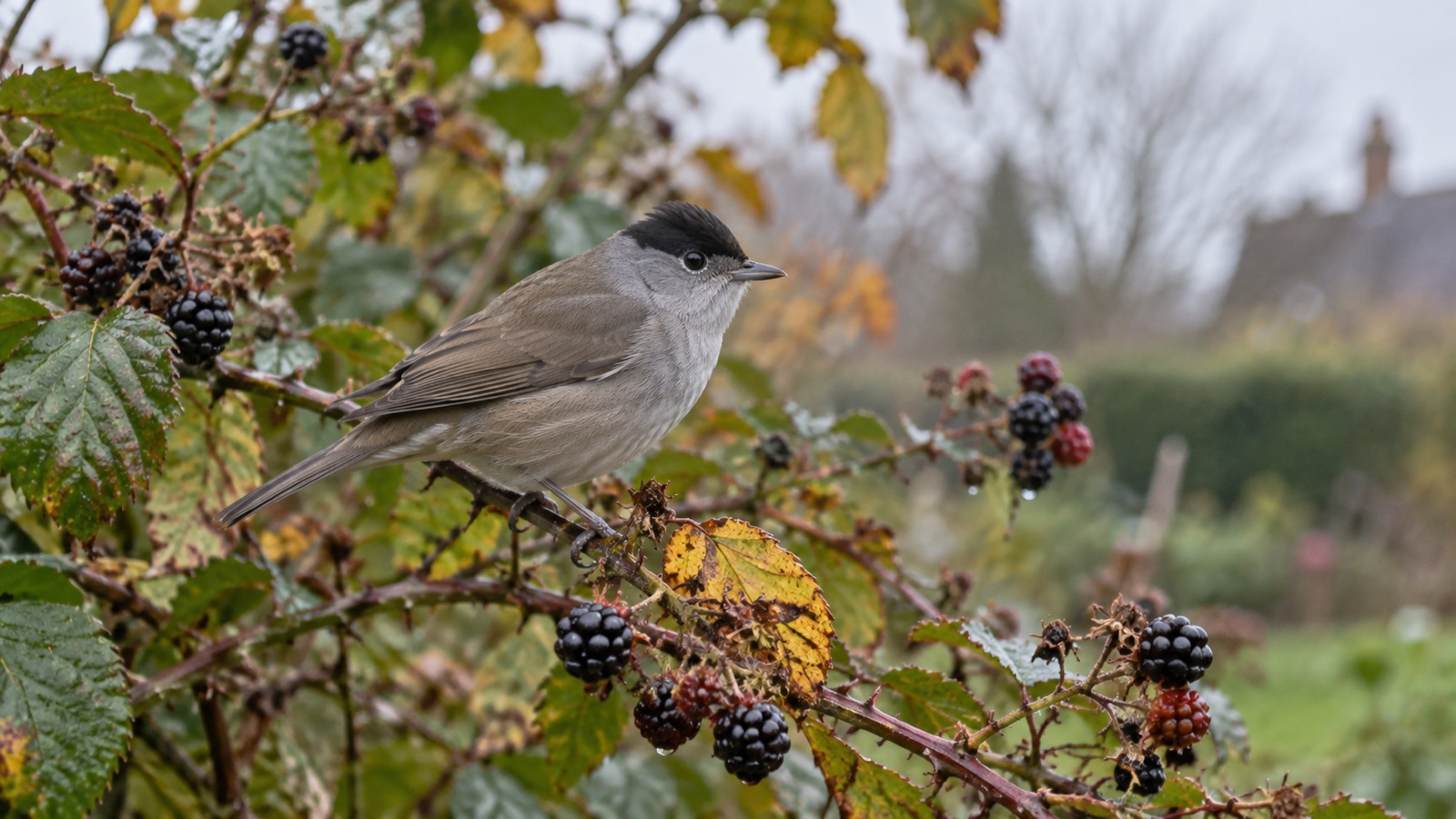
What do blackcaps eat? They take insects and other small invertebrates, as well as berries and fruit when these are available. A blackcap is a warbler, not a finch, and its winter behaviour can surprise people who think of it only as a summer songbird. The RSPB blackcap account describes increasing winter visits to UK gardens and fruit-seeking birds that can be assertive around food. Keep existing fruiting plants and cover before adding another feeder.
If you see a greyish bird with a tidy dark cap in December, it is worth checking carefully. A male bullfinch is much heavier-billed and differently coloured; a female blackcap has a brown, not black, crown. A high-quality RSPB photograph of each sex is more reliable than our illustrative hero.
How do you identify a male or female blackcap?
Both are slim, grey-brown birds with a fine bill and a cap that covers the crown rather than the whole face. The male's cap is black; the female's is chestnut. The rest of the body is understated, which is why the head colour attracts attention. Watch for the bird's shape, thin bill and restless movement through shrubs rather than deciding from a dark patch glimpsed in shadow.
In the warmer months, a rich, fluting song may reveal a blackcap before you see it. In winter the bird may be quieter and more visible at a berry shrub or water source. Its song and photographs are available on the RSPB species page; use those when an identification matters.
Why are blackcaps now seen in winter?
The RSPB explains that blackcaps breeding here often travel south, while some birds from continental Europe spend winter in Britain. A blackcap at your feeder in January is therefore not necessarily the same individual you heard singing in the garden in spring. Do not turn this into a rigid rule for every bird: migration varies and sightings depend on local weather and food.
Fruiting shrubs can give a winter visitor a reason to pause. Ivy berries and other naturally available fruit also support more species than one bird, as outlined in the RSPB natural-food guide. Keep shelter near, but not directly above, any optional feeding point so a bird has a route away from danger.
Will a blackcap eat suet or fruit from a feeder?
It may take fruit and sometimes suet, but individuals differ. If one already visits, try a small amount of fresh suet in a net-free holder, then see whether it is used. The fat-ball guide explains why retail netting should be removed, and the fat-ball-feeder guide covers rigid, cleanable holders. A bag of fat balls is not an attraction guarantee. Remove old food rather than leaving it to soften and spoil.
A simple, short-lived fruit offering can also make sense in cold weather. Our fruit-feeder guide looks at holders, but natural berries are the first choice when available. Do not put fruit on a broad bird table and let many birds feed among droppings. The current RSPB feeding update discourages flat-surfaced communal feeders.
What if a blackcap chases other birds away?
That can happen around a valuable food source, especially in winter. It does not make the bird aggressive in some unusual sense or require you to remove it. Use small portions and spread natural food through the garden where possible. If one suet holder becomes a defended point, do not answer with a much larger communal tray; a second modest contained point or simply relying on fruiting plants is more sensible.
Keep hygiene high. RSPB's current advice asks for used feeders to be cleaned and moved weekly and for water to be changed daily. The BTO FAQ also recommends pausing seed and peanuts May–October, even if blackcaps are the birds you most notice. Small suitable suet amounts may continue, but only while fresh and properly managed.
How can you help without feeding?
Keep dense shrub cover, flowering and fruiting plants, and a small clean water source. Insect-rich vegetation matters when blackcaps are breeding and during milder weather. If you prune, first check for active nests and avoid disturbing them. A garden that supplies cover and natural prey is more useful than an exposed feeder in an otherwise bare space.
Are all blackcaps in the UK winter visitors?
No. Many are familiar summer visitors, while a growing number spend winter here. The winter birds may come from different breeding populations.
Is a blackcap a type of tit?
No. It is a warbler with a finer bill and different feeding habits. The black or chestnut cap is the visual clue; the surrounding body shape and behaviour help confirm it.
Helpful products
A small suet option for a visiting blackcap
Offer only a modest fresh portion in a rigid, cleanable holder if a blackcap already visits. The bird may prefer natural berries or insects and might never use a suet holder.
RSPB fat balls (six-pack)
Best for: Trying modest net-free fat portions when a blackcap already visits
A small pack of six suet balls made with a blend that includes wheat flour, ground peanuts and seeds.
Keep in mind: Keep food fresh and use a rigid holder; berries and insects are also important.
Jacobi Jayne Bird Lovers small fat ball feeder
Best for: A compact, cleanable way to present one suet ball
A compact hanging feeder that holds up to three suet balls and has a quick-release base for easier cleaning.
Keep in mind: There is no guarantee a visiting blackcap will use it; remove any retail netting.