Feeder buying guide
Best easy-fill bird feeders for UK gardens
Compare simple seed-tube, flip-top suet and basket designs for quick refilling without sacrificing cleaning access or food freshness.
Our recommendations
Three easier ways to refill
These feeders differ by food type, so decide what you will serve before judging the lid or opening.
RSPB Classic easy-clean seed feeder (small)
A simple 500ml, two-port feeder with a polycarbonate tube and plastic fittings that come apart without tools.
Best straightforward alternative. Drawback: RSPB warns that squirrels and parakeets may damage the plastic parts.
Gardman Flip Top suet feeder
A compact plastic-and-steel hanging cage with a flip-top lid, sized to hold one standard suet feast block.
Best simple budget holder for one block. Drawback: it offers little rain protection and does not restrict squirrels or larger birds.
Jacobi Jayne suet ball basket
A powder-coated metal basket with a weather roof and capacity for five standard 100g fat balls without plastic nets.
Best open metal basket for several clinging birds. Drawback: the exposed sides offer less protection from rain and larger birds than a guardian cage.
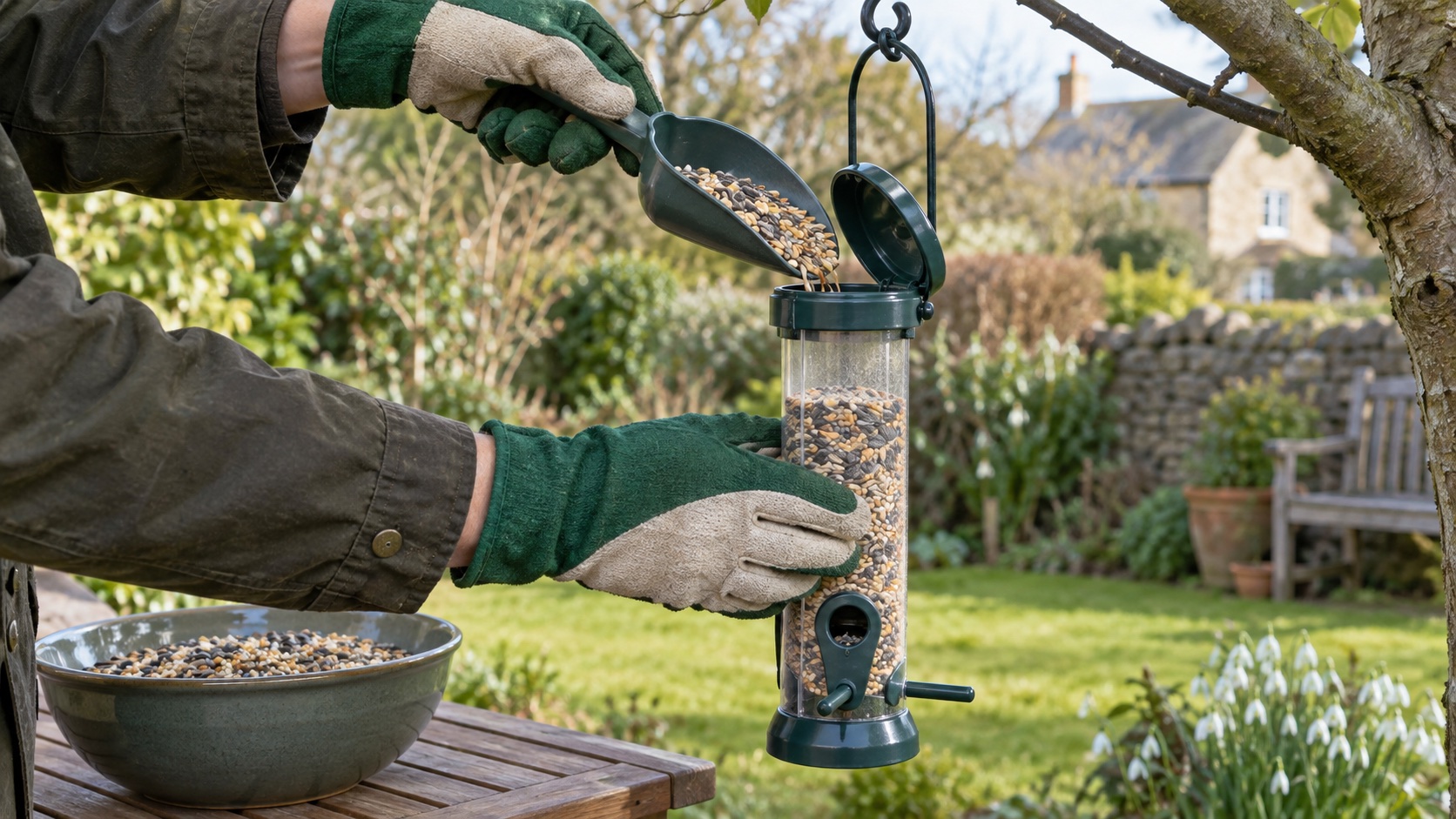
The least frustrating feeder is one you can reach, open, top up modestly and take apart when it is dirty. A giant hopper may need fewer refills, but it can leave seed outdoors for too long. “Easy-fill” should mean a safe hand movement and a manageable opening—not an invitation to keep pouring new food onto old.
What makes these three different?
The RSPB Classic seed tube has a simple lift-off top and a short clear body. It is easy to see the remaining food and pour in a small quantity without handling a long, heavy tube. Its two ports suit a modest garden better than a crowded multi-port reservoir. Plastic fittings are its weak point, so do not force the lid if it sticks or let squirrels chew it. It is for dry compatible seed during the November–April seed season.
The Gardman Flip Top suet holder is for blocks or cakes rather than loose seed. A hinged top avoids juggling a detached lid while holding a greasy block. Check that the hinge still closes securely after weathering and that the chosen block fits without being rammed into the mesh. Suet residue in the hinge and bottom frame still needs scrubbing.
The Jacobi Jayne suet ball basket loads from its broad upper opening. Its shape makes adding a few unnetted fat balls less fiddly than threading them into a narrow cylinder. The open loading route is also exposed to rain and larger birds, so use only a modest amount and check the food after wet weather. It is not a substitute for a guarded feeder if starlings or squirrels already dominate your garden.
Fill access and cleaning access are separate
A lid that flips up is convenient, but you still need to reach the lowest food-contact surfaces. On a seed tube, inspect behind ports and at the base. On a suet holder, brush the mesh junctions and hinge. If the feeder cannot be dismantled enough to remove old food, quick refilling becomes a liability. Our easy-clean feeder guide compares models primarily on that criterion.
Put the hook at a height you can reach safely. A feeder that requires a ladder for every weekly clean is not easy to maintain, however clever its lid. Check that the hook will not swing over paving where a full feeder could strike a window. Keep a scoop for bird food only and store feed sealed and dry.
The right amount to add
RSPB advises feeding in moderation. Seed and peanuts should be eaten within a day or two; mealworms should be cleared by dusk if not eaten; suet can remain longer but still needs checking for spoilage. There is no prize for filling to the rim. A quarter-full short tube may be perfect for a quiet garden.
Current BTO/RSPB advice also pauses seed and peanuts from May through October because of disease risk, then resumes them in November. The suet holders are the more relevant shortlist outside that seed period, provided the weather and food condition make them suitable. Do not fill a seed tube out of season simply because it is quick to do so.
Which should you buy?
Choose the Classic for simple seed refills in season, the Gardman when blocks are the main food and you want a hinged lid, and the Jacobi Jayne basket if unnetted fat balls are awkward to load into your current narrow cage. If your existing feeder's only problem is that it hangs too high, move the hook before buying a replacement.
Common questions
Is a funnel necessary for a seed tube?
Usually not for a short, broad enough tube. A small dedicated scoop gives better portion control and is easier to keep clean.
Can I top up without emptying first?
Check the remaining food for dampness and age. Do not bury stale food under fresh seed. Empty, wash and fully dry the feeder at least weekly.
Should I use a catch tray to make filling tidier?
No. Current BTO advice is to avoid flat feeding surfaces, including troughs beneath hanging feeders. Fill over a container indoors or outdoors, then clear any spill.