
Budget buying guide
Best bird feeders under £20 in the UK
Four practical Amazon UK feeders checked below £20 in September 2026, compared by food type, cleaning and real drawbacks. Check today's price before buying.
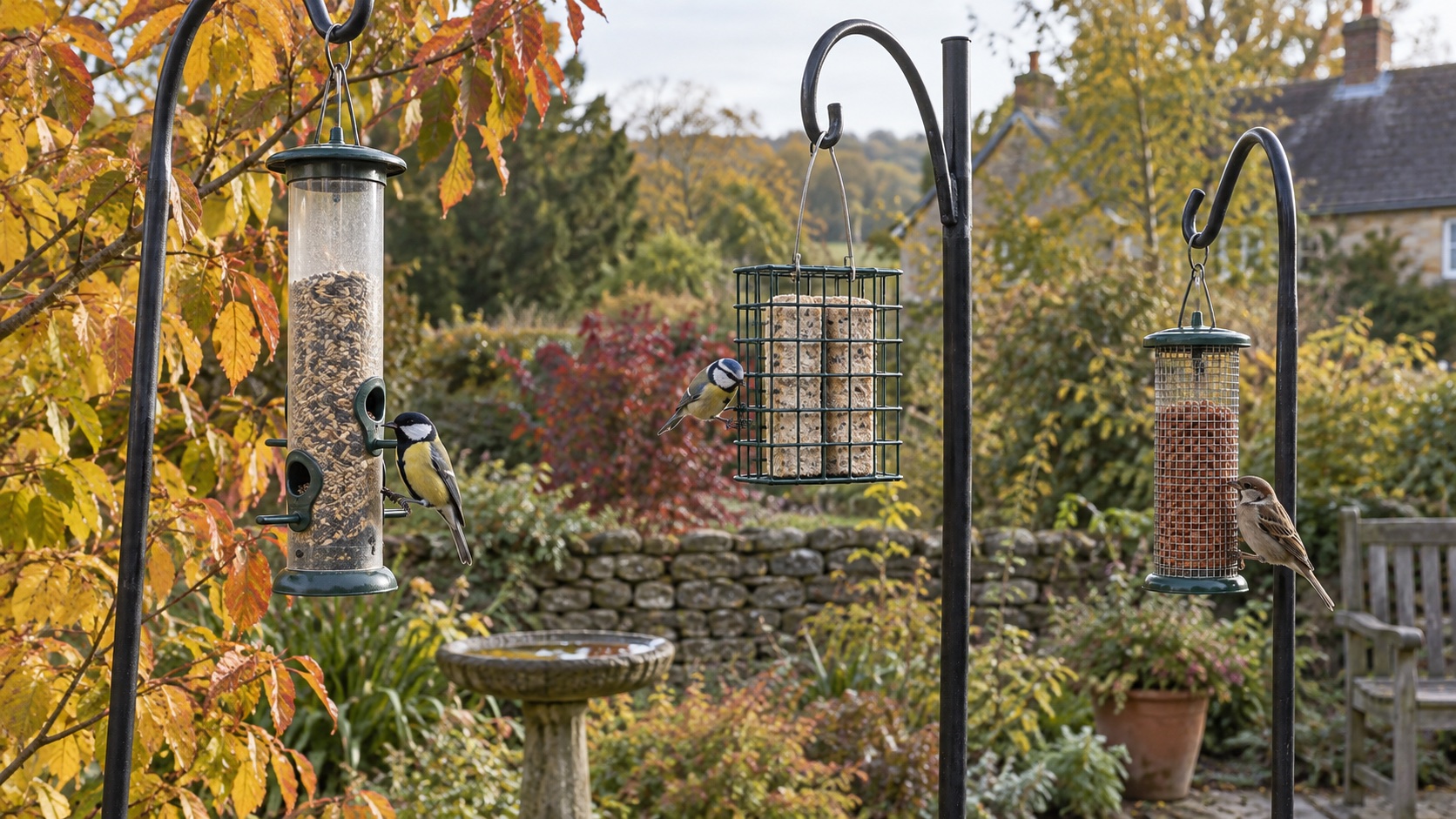
Our recommendations
Four feeders checked below £20
All four Amazon UK listings were below £20 when checked on 26 September 2026. Prices and availability can change, so confirm the live listing before buying.
RSPB Classic easy-clean seed feeder (small)
A simple 500ml, two-port feeder with a polycarbonate tube and plastic fittings that come apart without tools.
Best straightforward alternative. Drawback: RSPB warns that squirrels and parakeets may damage the plastic parts.
Jacobi Jayne Bird Lovers small fat ball feeder
A compact hanging feeder that holds up to three suet balls and has a quick-release base for easier cleaning.
Best small-capacity easy-clean option. Drawback: the plastic construction offers less chew resistance than an all-metal cage.
Supa caged seed feeder
A powder-coated steel cage around a seed tube, with a flip-top lid and stated overall dimensions of about 26 by 17 by 17cm.
Best simple guarded seed option. Drawback: the cage cannot guarantee exclusion and creates more joints to inspect and clean.
Gardman Flip Top suet feeder
A compact plastic-and-steel hanging cage with a flip-top lid, sized to hold one standard suet feast block.
Best simple budget holder for one block. Drawback: it offers little rain protection and does not restrict squirrels or larger birds.
An inexpensive bird feeder can be a good choice if it presents the right food, comes apart for cleaning and is small enough for food to turn over. Our four examples were checked on Amazon UK on 26 September 2026; this is a shopping shortlist, not a promise that each listing will remain below £20. The buttons show the current offer.
The budget shortlist
RSPB Classic easy-clean seed feeder: best first seed tube
The small Classic has two ports, a clear tube and plastic fittings that dismantle without tools. It is easy to see when food is damp or running low, and the short body is manageable when you are cleaning weekly. This was the lowest-priced seed feeder on our check. Fill it in the November–April seed season and start with less than its full capacity.
Its drawback is exposed plastic. Squirrels or parakeets may damage the fittings, and larger birds can reach the unguarded ports. If that is already a problem in your garden, buying this as a “cheap fix” may cost more after replacement.
Jacobi Jayne Bird Lovers small fat-ball feeder: best simple suet holder
This compact holder takes up to three fat balls and has a quick-release base. Its small capacity is a virtue when you want food cleared without leaving a large stock outside. Remove any netting from fat balls before putting them into a rigid holder. The metal mesh needs thorough brushing, especially where suet collects at the bottom. It offers no squirrel guard.
Supa caged seed feeder: best budget guardian
The Supa places a seed tube within an outer wire cage, making direct port access harder for pigeons and doves than an unguarded tube. The cage also makes cleaning more involved: remove old seed from the inner feeder and inspect the bars and base each week. A determined larger bird may still reach through or eat spill below. This is a November–April seed-season option, not a year-round food holder.
Gardman Flip Top suet feeder: best low-cost block holder
The Gardman holds one standard suet feast block in a compact hanging cage with a flip-top lid. It was the lowest-priced holder in this shortlist when checked. The opening is straightforward to fill, and one block is easier to monitor than a large basket of fat balls. It gives little protection from driven rain and does not restrict squirrels or larger birds; clean grease from the mesh and hinge rather than continually replacing blocks without washing.
What should you avoid at this price?
Do not choose a feeder merely because it includes a free flat tray. BTO's current advice says flat surfaces carry a higher apparent disease risk and are best avoided. Thin decorative cages that cannot be opened, sharp mesh, glued joints and reservoirs that trap wet food are poor bargains. A smaller robust design is more useful than a large, awkward one.
An inexpensive pole or hook is not automatically a safe support. Check its load, wind exposure and squirrel approach. Our feeder-pole guide covers those separate costs; this page compares feeder bodies, not a full station.
Budget feeding still needs a routine
RSPB's 2026 advice recommends seed and peanuts only from November through April. Small amounts of mealworms and suitable suet may continue from May through October. Offer only what will be eaten promptly, clean feeders at least weekly, move them periodically and remove old food beneath. A cheap feeder that is refilled but never dismantled is not a saving.
Common questions
Which one is best for a first-time buyer?
Choose the RSPB Classic if you intend to offer seed in season and have no persistent squirrel problem. Choose the small fat-ball holder if you want a simple, compact suet feeder. Do not buy both until you know local demand.
Are prices guaranteed to stay under £20?
No. The heading reflects prices observed on 26 September 2026. Amazon sellers can change prices, shipping and pack variants at any time. Check the live offer at the product button.
Does a cheaper feeder need more cleaning?
Not necessarily. The key is whether its ports, base and lid come apart so you can remove old food. Our easy-clean comparison focuses on that maintenance question across price bands.